Slovakia's Landscape Revitalisation and Integrated River Basin Management Programme
Slovakia
After the 2010 floods, Slovakia's government funded a nationwide network of small check-dams, infiltration ponds and revegetation built by local …
Poland · Warsaw · See the Poland profile · See the Warsaw profile
Evidence: Observational / pre–post Top 89% 27/100 · Ask Evidence Copilot about this practice
Poland's statutory Drought Effects Counteracting Plan, run by State Water Holding Wody Polskie, has completed 55 small-scale retention investments worth almost 150 million PLN, while the country retains only about 7.5% of average annual river runoff against a ~15% potential.
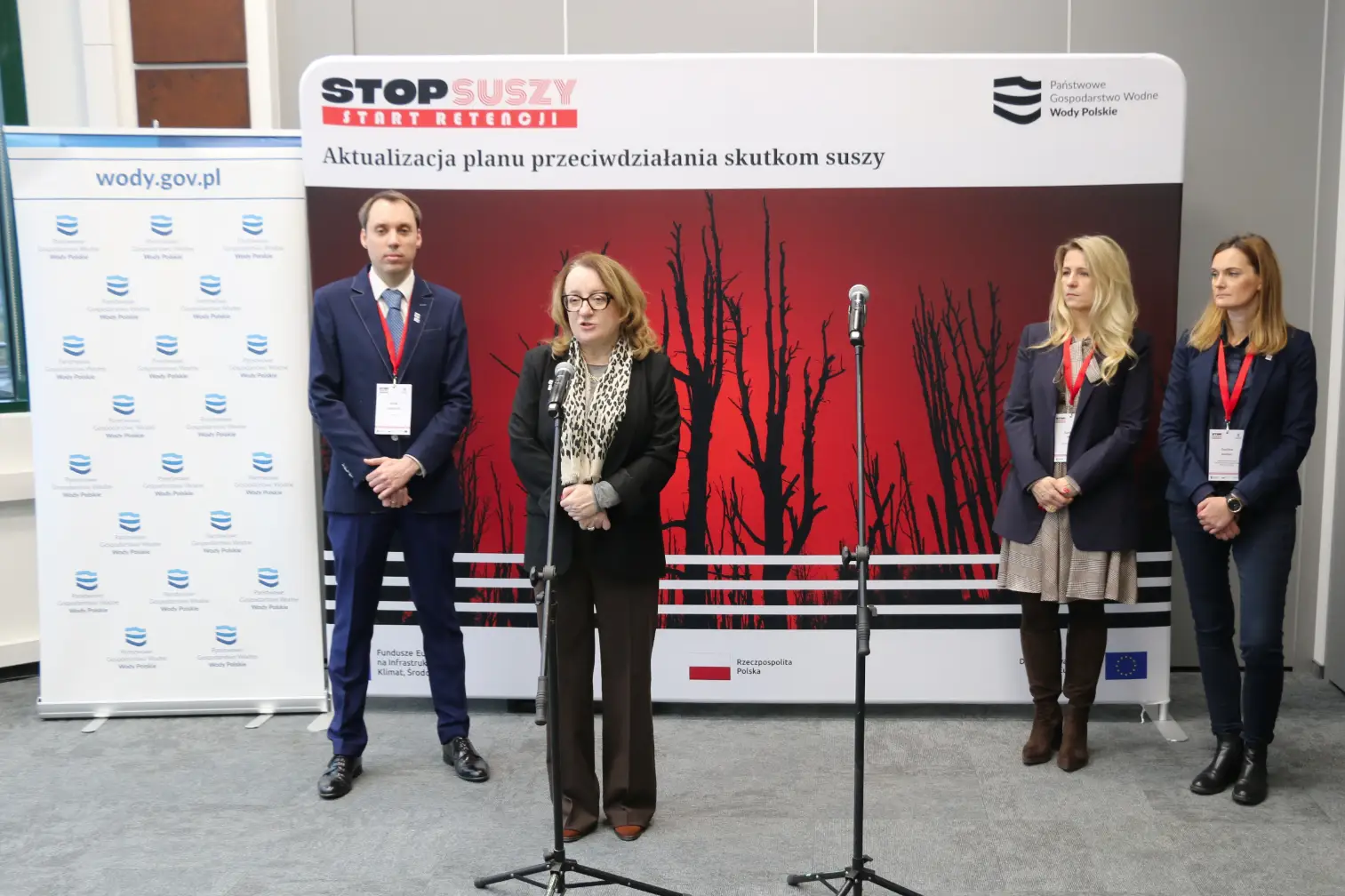
Poland has among the lowest per-capita renewable water resources in Europe (roughly a third of the EU average). The statutory Drought Effects Counteracting Plan (DECP), based on Poland's Water Law Act implementing the EU Water Framework Directive, sets out drought-risk measures for 2021-2027. The State Water Holding Wody Polskie administers the plan and is running a public consultation to update it ('Stop Suszy! Start Retencji!'), targeting adoption around 2027-2028.
Reduce drought risk by rebuilding small-scale water retention infrastructure and slowing runoff, reassessing drought risk by river basin and commune.
Under the plan, 55 completed investments (worth almost 150 million PLN) have rebuilt small water-damming structures on minor watercourses, restored the retention function of drainage systems, and slowed runoff from agricultural land. Agency reporting also cites 23 further investments (over 60 million PLN) completed and more than 119 million PLN of additional work underway, alongside a separate 76.5 million PLN co-financing stream for floodplain/valley renaturalisation.
Farmers in project areas report that local retention works eased drought impacts and lifted crop yields by 30-40%, though these figures are self-reported rather than independently audited. Nationally, Poland still retains only about 7.5% of average annual river runoff, versus an estimated natural potential of around 15%.
The September 2024 record-low Vistula water level in Warsaw (20 cm, with 73% of gauging stations reporting low water) illustrates how far the country still has to go.
National / regional programmes
Indicative funding routes for practices of this type — always check each programme's current calls and eligibility rules.
Do you run this practice? Claim it — verified implementers get a public contact pathway and can propose corrections.
Where this practice's information was retrieved from, and when.
Slovakia
After the 2010 floods, Slovakia's government funded a nationwide network of small check-dams, infiltration ponds and revegetation built by local …
Burkina Faso
From 1980, farmer Yacouba Sawadogo revived zaï planting pits in Burkina Faso's Yatenga province, helping plots reach ~1,500 kg/ha of …
Romania
Romania's PNDR Measure 10 pays 125–500 EUR/ha to smallholder farmers maintaining biodiversity-rich HNV meadows. Over 2015–2019, 212,413 beneficiaries received EUR …
Brazil
Since 2011, Brasília's water regulator ADASA and utility Caesb have paid producers in the Pipiripau basin to restore riparian buffers …
Open full copilot Grounded in cited practices — always check the sources.