GECI Island Restoration Programme — Invasive Mammal Eradication (Mexico)
Mexico
Since the late 1990s, Mexican NGO GECI has removed 60 populations of 13 invasive mammal species from 39 Pacific islands, …
New Zealand · Wellington · See the New Zealand profile · See the Wellington profile
Evidence: Observational / pre–post Top 58% 40/100 · Ask Evidence Copilot about this practice
A Wellington City Council-backed programme eliminated ship rats, Norway rats, stoats and weasels from the 1,086 ha Miramar Peninsula by November 2023, with zero camera detections since and a 136% rise in native bird signs, part of a wider 30,000 ha eradication plan.
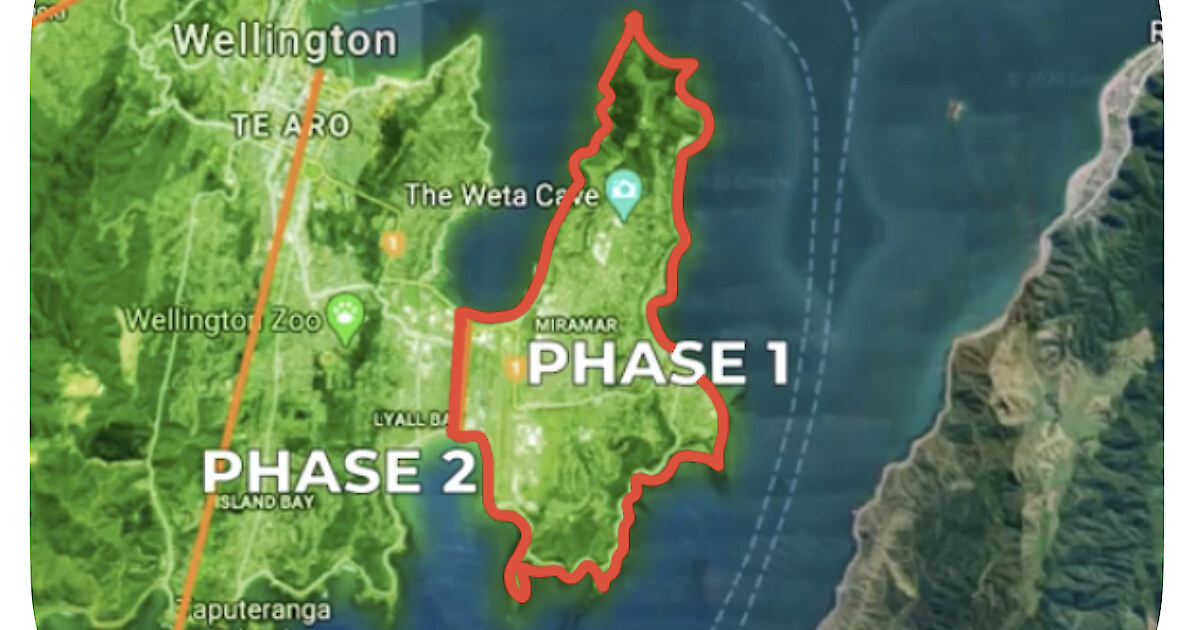
Predator Free Wellington is a partnership between Wellington City Council, Greater Wellington Regional Council, the NEXT Foundation and community trapping groups set up to remove introduced rats, stoats and weasels from New Zealand's capital across roughly 30,000 hectares in five phases.
Phase 1 targeted the 1,086-hectare Miramar Peninsula. Norway rats and weasels were removed in 2021 and the last ship rats eliminated by November 2023, confirmed via a biosecurity grid of trail cameras and lure dispensers on every hectare. About 20,000 residents (roughly one in three households) took part, with volunteer trapping contributing about 10% of the operational workforce alongside 26 dedicated field staff.
Zero camera detections were recorded for over two years after eradication. Post-eradication monitoring on Miramar recorded a 136% increase in signs of native birds, a fivefold increase in kōtare (kingfisher) detections, a 280% increase in riroriro (grey warbler) and a 200% increase in tree wētā.
Only Phase 1 of five is complete and the programme depends on continuous biosecurity monitoring to prevent reinvasion from untreated areas; detailed funding and cost breakdowns were not published in the sources reviewed.
LIFE Programme National / regional programmes
Indicative funding routes for practices of this type — always check each programme's current calls and eligibility rules.
Do you run this practice? Claim it — verified implementers get a public contact pathway and can propose corrections.
Where this practice's information was retrieved from, and when.
Mexico
Since the late 1990s, Mexican NGO GECI has removed 60 populations of 13 invasive mammal species from 39 Pacific islands, …
Mauritius
From 1976, Durrell, Mauritius's National Parks Service and the Mauritian Wildlife Foundation eradicated invasive goats (1979) and rabbits (1986) from …
Ecuador
Ecuador's Galápagos authorities and NGO partners aerially and manually baited the entire 17,250 ha Floreana Island against invasive rats, mice …
United States of America
Ten island watershed partnerships co-manage 2.6M acres of Hawaiian native forest through fencing and invasive/ungulate removal. ~US$2.5M annual state funding; …
Open full copilot Grounded in cited practices — always check the sources.