Redonda Ecosystem Reserve — Rat and Goat Eradication (Antigua and Barbuda)
Antigua and Barbuda
Goat and rat eradication (2016–2018) on the barren islet of Redonda triggered a peer-reviewed sixfold+ rebound in an endemic ground …
Cabo Verde · Santa Luzia · See the Cabo Verde profile
Evidence: Observational / pre–post Top 89% 27/100 · Ask Evidence Copilot about this practice
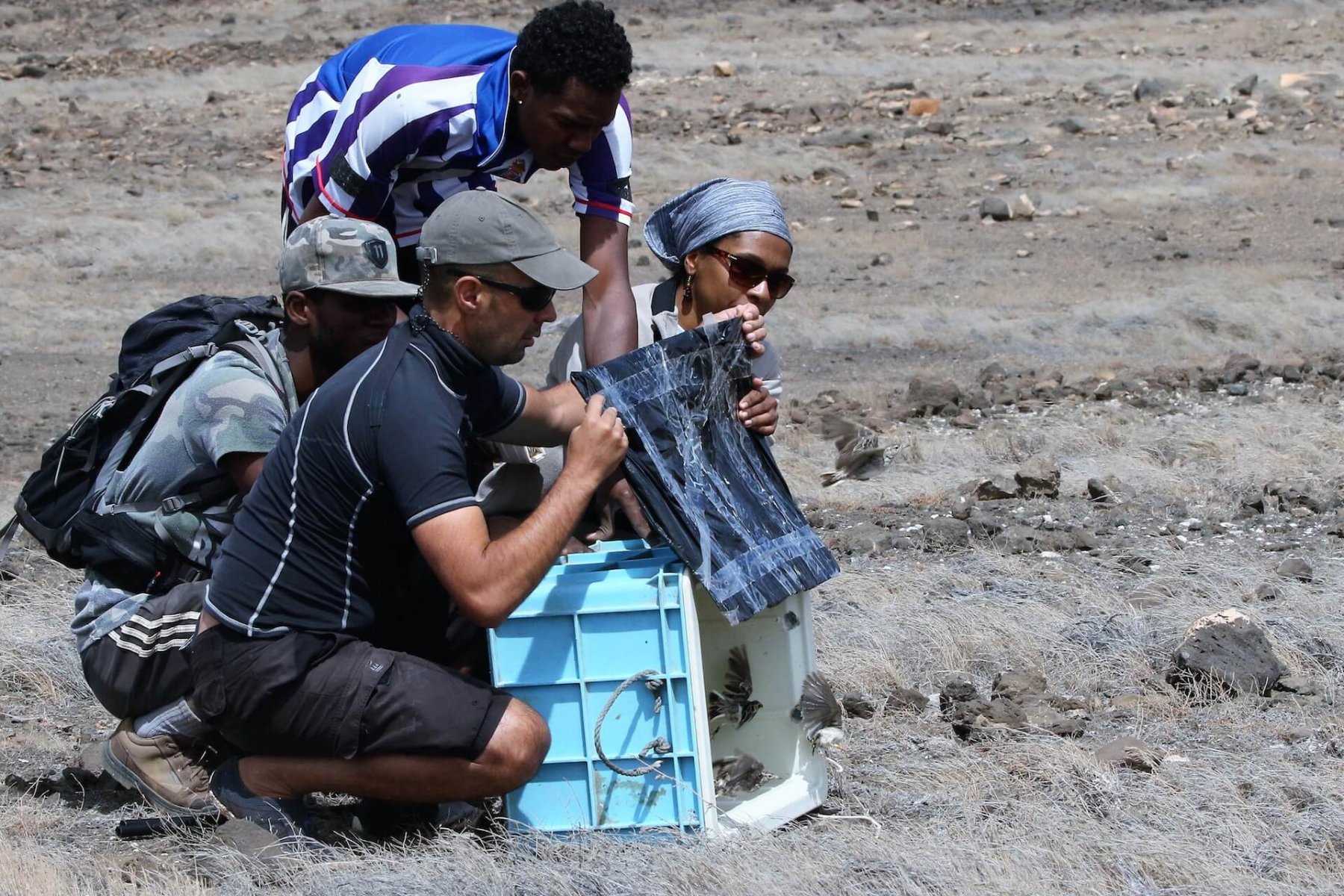
SPEA, Biosfera 1 and Cabo Verde's environment agency translocated 37 Critically Endangered Raso Larks to predator-controlled Santa Luzia in 2018 (plus 33 more later); breeding was confirmed, though COVID-19 interrupted the underlying cat-eradication work.
The Raso Lark is a Critically Endangered songbird historically confined to a single 7 km² islet, Raso, in Cabo Verde's Barlavento island group - a single-island endemism that creates acute vulnerability to catastrophic events such as drought, disease, or introduced predators. From 2017, SPEA (Sociedade Portuguesa para o Estudo das Aves), Biosfera 1 and Cabo Verde's Directorate-General for Environment (DNA) began feral cat eradication on the neighbouring 35 km² island of Santa Luzia, as part of ecological restoration of the Santa Luzia Nature Reserve within the roughly 11,000-hectare Santa Luzia Marine Protected Area, funded by the MAVA Foundation.
To establish a second, predator-free population of the Raso Lark on Santa Luzia island, reducing extinction risk associated with single-island endemism.
In April 2018, 37 Raso Larks were translocated from Raso to Santa Luzia with specialist Dr Mike Brooke. A follow-up translocation moved a further 33 larks (19 males, 14 females) to broaden genetic diversity. In parallel, feral cat eradication was carried out on Santa Luzia.
By March 2019, approximately 20 larks were recorded on Santa Luzia: 5 original released birds, 2 colour-ringed birds that had flown independently from Raso, and 12 unmarked birds including hatchlings - confirming that released birds had bred on Santa Luzia and that their annual survival was comparable to the source population on Raso. Separate BirdLife monitoring on nearby islets (Raso, Branco, Rombo) recorded no seabird predation over a 2.5-year period.
The translocation itself is documented as successful and published as a transferable case study in the IUCN journal PARKS. However, the cat-eradication component on Santa Luzia was interrupted when the island was evacuated during the COVID-19 pandemic, leaving the ultimate outcome of that eradication - and therefore the long-term security of the reintroduced lark population against residual or reintroduced cats - independently unconfirmed.
Philanthropic / foundation funding
Indicative funding routes for practices of this type — always check each programme's current calls and eligibility rules.
Do you run this practice? Claim it — verified implementers get a public contact pathway and can propose corrections.
Where this practice's information was retrieved from, and when.
Antigua and Barbuda
Goat and rat eradication (2016–2018) on the barren islet of Redonda triggered a peer-reviewed sixfold+ rebound in an endemic ground …
Mexico
Since the late 1990s, Mexican NGO GECI has removed 60 populations of 13 invasive mammal species from 39 Pacific islands, …
Ecuador
GEF-funded campaign by Galápagos National Park and the Charles Darwin Foundation removed 140,000+ feral goats from 500,000+ ha across Pinta, …
Mauritius
From 1976, Durrell, Mauritius's National Parks Service and the Mauritian Wildlife Foundation eradicated invasive goats (1979) and rabbits (1986) from …
Open full copilot Grounded in cited practices — always check the sources.