Thailand 'AI for Teachers' — Upskilling 160,000 Educators Nationwide
Thailand
Government programme that trained and certified 160,507 Thai educators in ethical AI use, saving 4 hrs/week per teacher, and reaching …
Rwanda · Kigali · See the Rwanda profile · See the Kigali profile
Evidence: Descriptive / self-reported Top 24% 60/100 · Ask Evidence Copilot about this practice
Rwanda's MINEDUC and REB partnered with Day of AI (MIT RAISE) to train 150 AI champions who cascaded training to 5,000+ teachers across all 30 districts by December 2025; complemented by Africa's first national AI education cloud and an Anthropic/ALX learning companion.
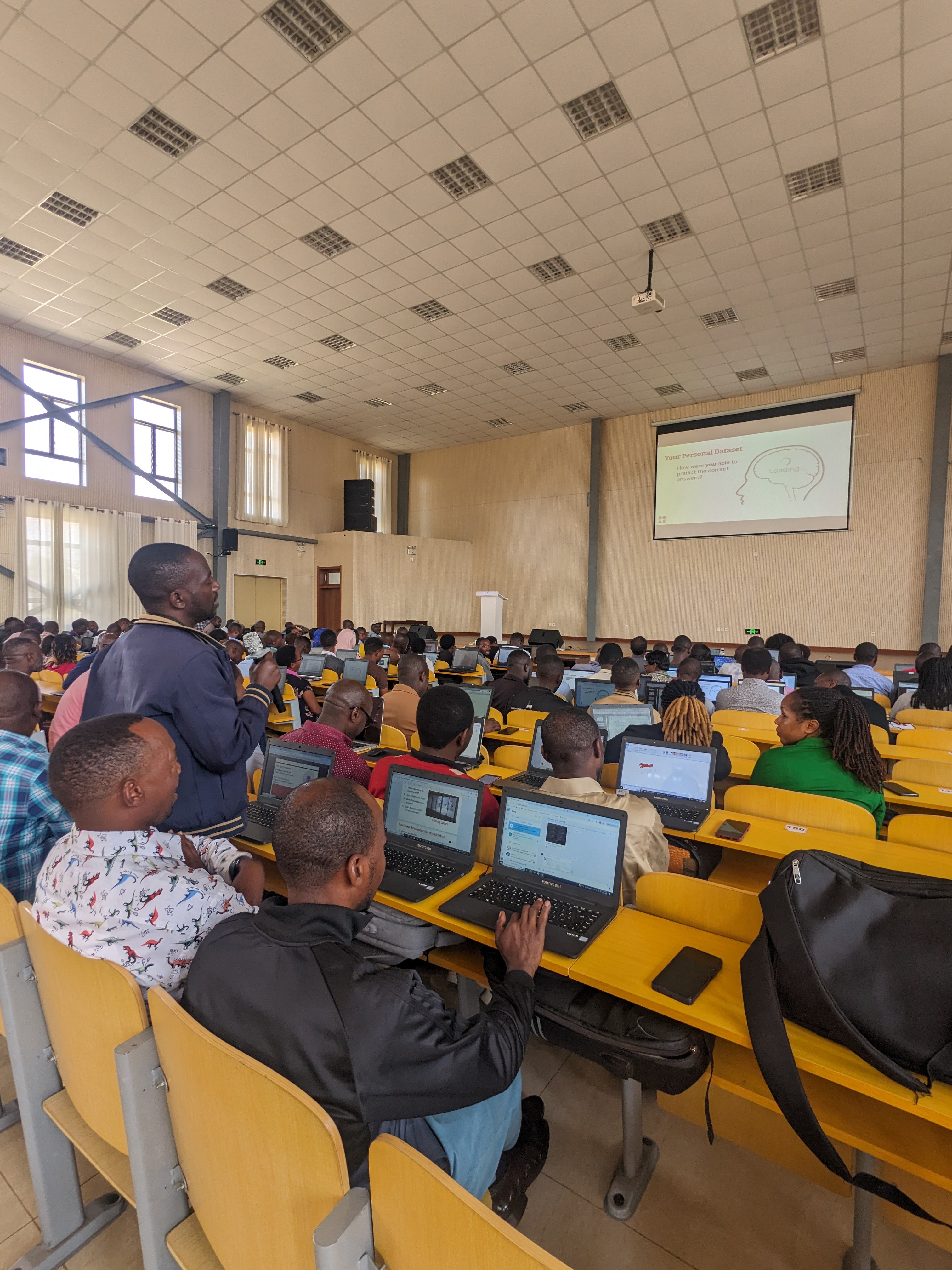
Rwanda's Ministry of Education (MINEDUC) and Rwanda Education Board (REB) partnered with Day of AI and MIT RAISE to launch a national AI teacher-training programme in July 2025, using an explicitly cascading model.
The programme aims to achieve system-wide AI literacy training for teachers, enabling them to explain AI concepts, integrate AI tools responsibly into lesson design, and guide students to build AI solutions addressing community challenges.
150 master teachers ('AI champions') were trained directly by MIT RAISE researchers, then fanned out across all 30 districts of Rwanda to train fellow educators, using Day of AI's MIT RAISE curriculum adapted for the Rwandan context. A complementary Anthropic–Government of Rwanda–ALX partnership deploys Chidi, an AI learning companion built on Claude, with Rwanda's education and ICT ministries enabling AI training for up to 2,000 additional teachers and civil servants. Rwanda is also preparing Africa's first AI-optimised national teaching and learning cloud, developed with U.S. ed-tech partners, capable of personalising instruction in Kinyarwanda and English.
By December 2025, the first round of cascading training had reached more than 5,000 teachers, making Rwanda one of the first countries globally to achieve system-wide AI literacy training for teachers.
The policy framework — the National AI Policy (2023) and the Foundational Learning Strategy (2024–2029) — provides sustained institutional backing, but student-facing learning-outcome data from the trained cohort have not yet been published.
National / regional programmes
Indicative funding routes for practices of this type — always check each programme's current calls and eligibility rules.
Do you run this practice? Claim it — verified implementers get a public contact pathway and can propose corrections.
Where this practice's information was retrieved from, and when.
Thailand
Government programme that trained and certified 160,507 Thai educators in ethical AI use, saving 4 hrs/week per teacher, and reaching …
Taiwan
Taiwan's MoE integrates AI into its free national Adaptive Learning Platform (TALP) for K-12. A quasi-experiment (n=4,442 sixth-graders) showed significant …
Czechia
Czech Republic's EUR 3.95M National Recovery Plan-funded AIDIG project trains teachers at all school levels in AI integration using the …
Morocco
Morocco's DigiSchool (Feb 2024) trained 265 secondary teachers in AI, VR and coding across all 12 regions; teacher-led follow-up reached …
Open full copilot Grounded in cited practices — always check the sources.