BrailleGenAI — Edge-AI Braille Learning Game Piloted at Karachi's School for the Blind and Deaf
Pakistan
Mehran University and the IEEE Karachi Section built BrailleGenAI, an edge-AI and generative-AI device that reads tactile Braille blocks aloud …
Bhutan · Thimphu · See the Bhutan profile · See the Thimphu profile
Evidence: Descriptive / self-reported Top 7% 73/100 · Ask Evidence Copilot about this practice
UNICEF Bhutan and the Ministry of Education trained curriculum experts, teachers and special-educators to produce accessible digital textbooks with PubCoder, piloting AI-narrated, sign-language-enabled storybooks in 19 schools for children with disabilities.
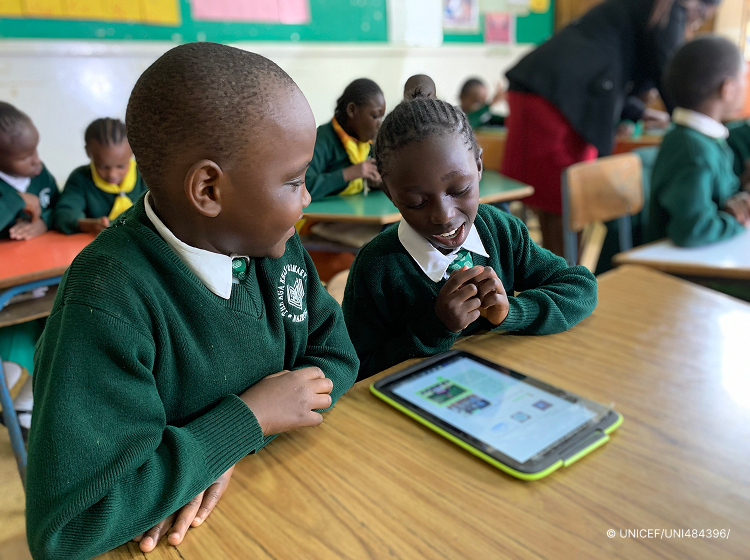
Since 2017, UNICEF's Accessible Digital Textbooks (ADT) initiative has worked with national education authorities to convert curriculum materials into Universal-Design-for-Learning formats — adding synchronised narration, sign-language video, audio description and adjustable text. From 2024, UNICEF partnered with OpenAI to build a generative-AI pipeline automating much of this conversion.
In Bhutan, UNICEF worked with the Ministry of Education and Skills Development to train national curriculum experts, classroom teachers and special-education specialists to produce accessible digital storybooks using the PubCoder authoring tool. The resulting titles were piloted in 19 schools with children with disabilities, part of a South Asia rollout alongside Nepal.
The AI pipeline cut production time for each accessible textbook from the previous 6-9 months (costing USD 20,000-50,000) to a matter of days. Across the eight-country cohort including Bhutan, UNICEF reports 1,975,329 students used accessible digital textbooks and 84,818 teachers were trained between November 2024 and July 2025 (regional totals; Bhutan-specific figures are not separately published). The latest PubCoder version scored zero validation issues on the independent Ace-by-DAISY accessibility checker, down from 516 issues in an earlier version.
The evidence available is production, reach and technical-compliance data rather than a measured learning-outcome study: there is no published comparison of reading comprehension or engagement for Bhutanese students using accessible digital textbooks versus standard textbooks.
Philanthropic / foundation funding National / regional programmes
Indicative funding routes for practices of this type — always check each programme's current calls and eligibility rules.
Do you run this practice? Claim it — verified implementers get a public contact pathway and can propose corrections.
Where this practice's information was retrieved from, and when.
Pakistan
Mehran University and the IEEE Karachi Section built BrailleGenAI, an edge-AI and generative-AI device that reads tactile Braille blocks aloud …
Jamaica
Jamaica's 2022 pilot developed accessible digital storybooks tested in five schools—four for deaf, blind and intellectually disabled students. UNICEF's 10-country …
Colombia
Colombia, one of UNICEF's original Latin American pilot countries for Accessible Digital Textbooks, adapted its first three children's titles with …
Paraguay
Paraguay has been part of UNICEF's Accessible Digital Textbooks initiative since 2016 and, in August 2018, became the first country …
Open full copilot Grounded in cited practices — always check the sources.