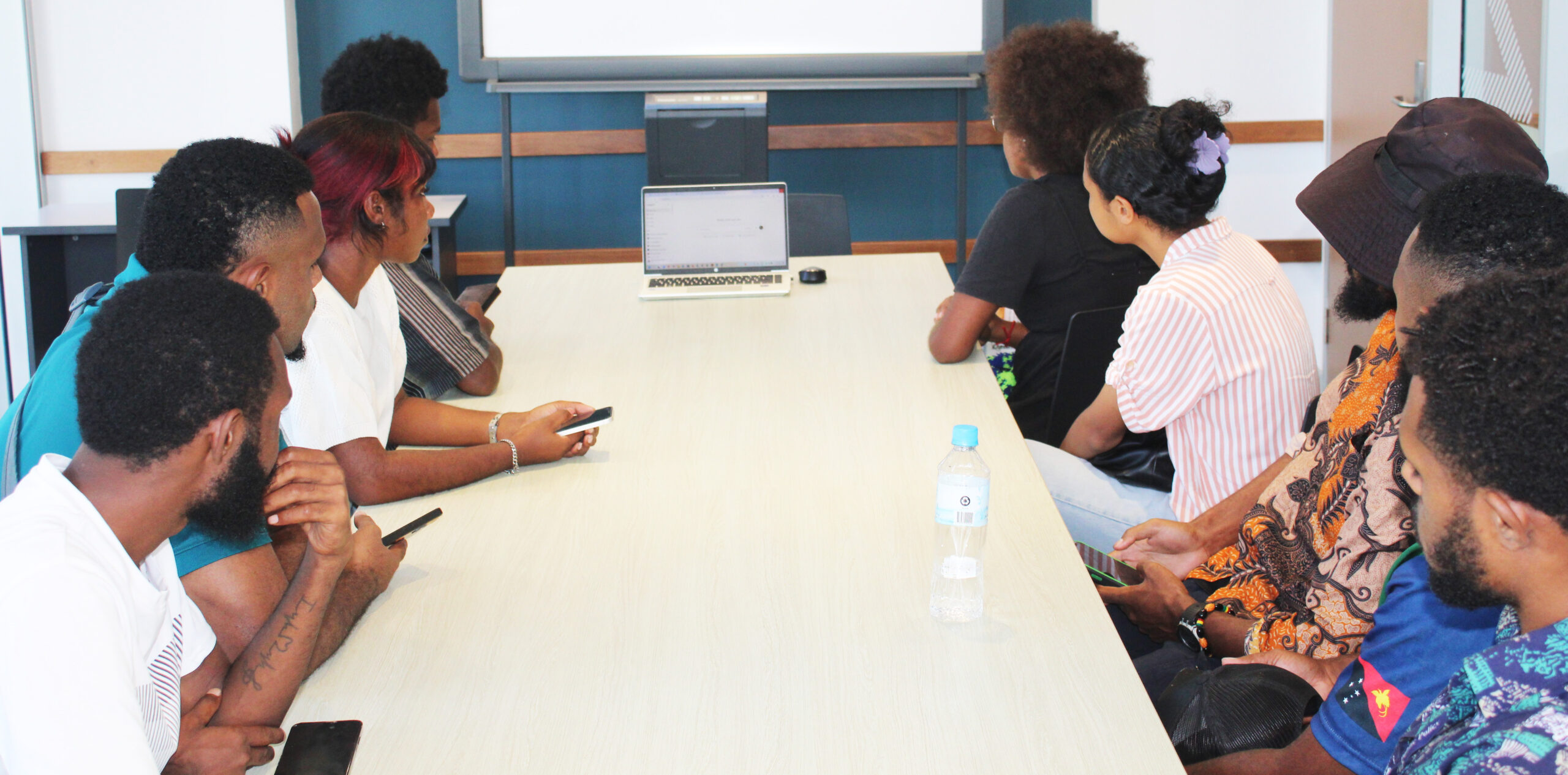
A 949-student UPNG survey (±5% margin, >99.9% confidence) found 33% had used AI to write assignments and 96% wanted clear guidelines, prompting the university to launch AI-focused degrees and embed AI literacy across all programmes from 2027.
949 undergraduates
Students surveyed (main study) (2026)
±5 %
Margin of error
>99.9 %
Confidence level
77 students
Pilot survey respondents
42 %
Daily AI use (pilot)
30 %
Weekly AI use (pilot)
33 %
Students who used AI to generate assignments (main survey)
0.54
Gender Parity Index
~90 %
Students owning a smartphone/laptop
77 %
Students reporting mixed emotions/guilt about AI use
96 %
Students wanting clear institutional guidelines
Details
Maturity
Pilot
Promoter
University of Papua New Guinea
Period
2025-2026
Keywords
higher education, public policy, information technology
Context
Following two surveys — a 77-student pilot in the School of Business and Public Policy, then a census-quality follow-up of 949 undergraduates across the Waigani and Taurama campuses (±5% margin of error, >99.9% confidence) — Raymond Kamb John and Nematullah Bizhan published results via the PNG Journal of Education and the Devpolicy Blog (Development Policy Centre, ANU) in June 2026.
Results
Findings: 42% daily and 30% weekly AI use in the pilot; in the larger survey, 33% had used AI to generate assignments, the Gender Parity Index stood at 0.54, about 90% owned a smartphone/laptop (often low-performance), 77% reported mixed emotions or guilt about AI use, and 96% wanted clear institutional guidelines.
Conclusions
Vice-Chancellor Prof. Ian Findlay announced a Centre of Excellence in Information Technology, three immediate certificate programmes, and four new Bachelor of Information Technology specialisations (Programming, Networking, AI, Cyber Security) starting 2027, plus a mandate to review all UPNG programmes to embed digital technology, AI, research/critical thinking and workplace skills. This is a self-reported survey (no causal learning-outcome data yet) and the curriculum overhaul was only announced in July 2026, with implementation still pending; the documented gender and device-access gaps have no measured intervention yet.
Implementation
Indicative cost
Medium (€50k–€500k)
Time to results
Medium (1–3 years)
Staffing & skills
University of Papua New Guinea School of Business and Public Policy researchers (Raymond Kamb John, Nematullah Bizhan), Vice-Chancellor's office (Prof. Ian Findlay) for policy response, Planned Centre of Excellence in Information Technology
Conditions for success
Rigorous, census-quality survey methodology (±5% margin, >99.9% confidence) to ground the policy response in evidence
Institutional leadership buy-in to act on survey findings with concrete new degree specialisations
Common failure modes
Documented gender gap (Gender Parity Index 0.54) and uneven device access have no measured intervention yet
Curriculum overhaul announced but implementation still pending as of this record
Do you run this practice?
Claim it —
verified implementers get a public contact pathway and can propose corrections.
Data sources
Where this practice's information was retrieved from, and when.
A 5-week AI-literacy module for pre-service physics teachers across nine Kazakhstani universities, led by Zhetysu University, raised literacy scores far …
Vietnam's Ministry of Education piloted a four-strand AI curriculum (human-centred thinking, ethics, technique, system design) in selected schools, grades 1–12, …