Tanzania e-IDSR — AI alert triage for national disease surveillance
Tanzania
Tanzania's Ministry of Health deployed an AI triage layer in its DHIS2 disease-surveillance platform, clearing 85% of a 15,000-alert backlog …
Uganda · Kampala · See the Uganda profile · See the Kampala profile
Evidence: Descriptive / self-reported Top 62% 53/100 · Ask Evidence Copilot about this practice
Developed by Makerere University and Johns Hopkins with Uganda's Ministry of Health, VectorCam uses AI computer vision to identify mosquito species at 90% accuracy via smartphone, enabling real-time malaria vector surveillance across 22 districts in resource-limited settings.
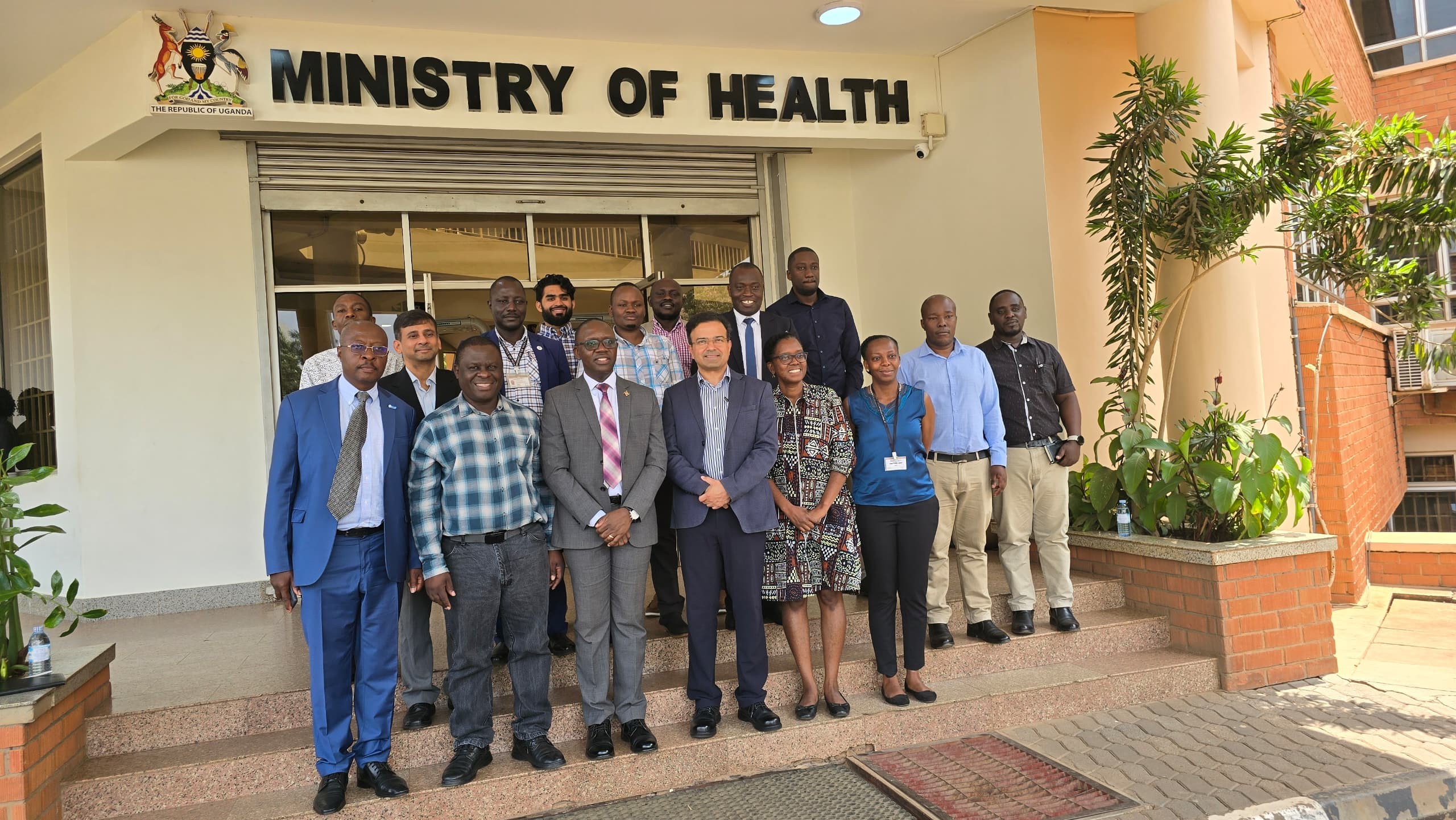
VectorCam is a smartphone-based AI application developed by Makerere University School of Public Health, the Johns Hopkins Bloomberg School of Public Health Center for Global Digital Health Innovation, and Uganda's Ministry of Health. It uses computer vision and deep learning, via a smartphone-attached microscope adapter, to identify mosquito species, sex, and blood-meal status directly in the field, without needing centralized laboratory infrastructure. The tool is intended to support malaria vector surveillance and targeted vector control in resource-limited districts where trained entomologists are scarce.
The project aims to enable real-time malaria vector surveillance without centralized laboratories, improve targeted vector control through accurate species identification, and extend surveillance capacity to resource-limited settings lacking trained entomologists.
After a pilot phase from November 2022 to April 2024, the tool was deployed across Ugandan districts with field validation of species-identification accuracy and operational research monitoring embedded in a subset of districts. As of 2025, Makerere University, Johns Hopkins and the Ministry of Health are scaling the project from 12 to a target of 22 districts, with research embedded in 12 of them, and results posted to Uganda's DHIS system for district and national access.
Field validation reported 90% accuracy for mosquito species identification, with classification completed in about 20 seconds per sample. The tool is deployed in 12 districts as of 2024/2025, with rollout targeted to reach 22 districts.
The evidence to date is limited to technical-performance and deployment-level indicators; no randomized controlled trial or formal impact evaluation has been published. Evidoria's own source assessment cautions that causal claims about population-level malaria outcomes should be treated carefully pending formal evaluation, which is planned as part of the Ministry of Health-led scale-up.
National / regional programmes
Indicative funding routes for practices of this type — always check each programme's current calls and eligibility rules.
Do you run this practice? Claim it — verified implementers get a public contact pathway and can propose corrections.
Where this practice's information was retrieved from, and when.
Tanzania
Tanzania's Ministry of Health deployed an AI triage layer in its DHIS2 disease-surveillance platform, clearing 85% of a 15,000-alert backlog …
Somalia
WFP's AI-assisted HungerMap Live platform, built with Google.org and covering 50+ countries, helped identify worsening hunger in Somalia's Buur Hakaba …
Switzerland
SPSP integrates AI-powered genomic analysis to detect pathogen variants across Switzerland. Mandated by the Federal Office of Public Health since …
Sierra Leone
Sierra Leone's National Medical Supplies Agency and University of Pennsylvania researchers built a decision-aware ML tool that raised essential-medicine consumption …
Open full copilot Grounded in cited practices — always check the sources.