Grey to Green — Sheffield's Retrofit SuDS Scheme Turning a Dual Carriageway into Rain Gardens (UK)
United Kingdom
Sheffield turned a redundant dual carriageway into the UK's largest retrofit SuDS scheme (2014-2022): swales cut peak flow up to …
Uzbekistan · Tashkent · See the Uzbekistan profile · See the Tashkent profile
Top 99% 13/100 · Ask Evidence Copilot about this practice
Uzbekistan's 2021 pledge to plant 1 billion trees, with 4,450 new hectares for Tashkent, delivered real volume, but a state audit found 6.2 million 'planted' trees fabricated and 2.4 million seedlings died from poor irrigation, prompting a new public tracking platform.
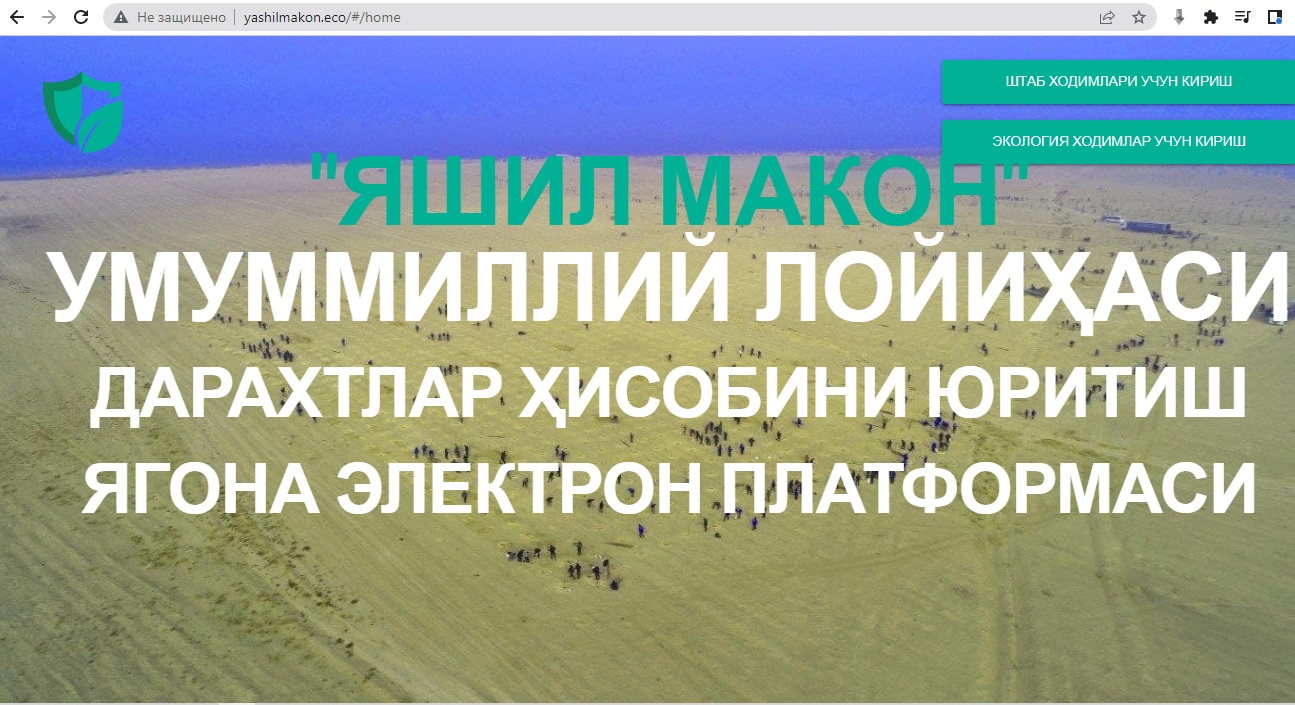
Uzbekistan declared a national "Yashil Makon" (Green Space/Green Nation) programme in November 2021, days after a record-breaking dust storm blanketed the country with coarse particulate levels reaching 18,000 micrograms per cubic metre — a consequence, in part, of some 75 million tonnes of dust and salt blown annually off the dried bed of the Aral Sea since the 1960s. The programme set a target of 1 billion trees and shrubs over five years (200 million saplings/year), aiming to raise urban green cover from 8% to 30% and, specifically for the capital, to add 4,450 hectares of new green space in Tashkent.
Early results were substantial in volume: 85 million saplings were reported planted by the end of 2021, with a further 125 million the following spring, and 500,000 hectares of drought-tolerant saxaul trees planted in desert areas to reduce dust-storm sources. By 2025 the government reported over 266 million saplings planted for the year.
The strongest evidence in this record is, however, cautionary: an audit by Uzbekistan's Chamber of Accounts and independent reporting found significant integrity problems in the programme's early execution: over 6.2 million saplings that were never planted had been logged as "planted" in official reports, more than 1 million trees were recorded on land with no irrigation, and roughly 2.4 million seedlings died before the end of one spring for lack of water and maintenance. In response, the government launched a public "Yashil Makon" data platform that lets citizens see exactly where trees have been planted, and UNDP has advised on systematising monitoring and financing (recommending it move beyond public-budget funding toward green bonds and other instruments) to make the programme sustainable.
Read the full analysis: https://daryo.uz/en/2022/10/24/yashil-makon-program-fiasco-officials-record-over-6-million-unregistered-trees-as-planted-24-trees-die/
Implementation detail (cost, timeline, staffing, conditions for success) is not yet available for this practice.
Do you run this practice? Claim it — verified implementers get a public contact pathway and can propose corrections.
Where this practice's information was retrieved from, and when.
United Kingdom
Sheffield turned a redundant dual carriageway into the UK's largest retrofit SuDS scheme (2014-2022): swales cut peak flow up to …
Netherlands
Since 2015 Dutch NGO IVN has planted 200+ tennis-court-sized 'Tiny Forests' nationwide. Wageningen University's citizen-science monitoring recorded 595-636 species across …
Sierra Leone
In 2021 Freetown named Africa's first Chief Heat Officer, pairing the new office with solar-powered market shade canopies and a …
Spain
After the 1957 flood the Turia was diverted south of Valencia and the dry riverbed became a ~9–10 km linear …
Open full copilot Grounded in cited practices — always check the sources.