The integrated system of Nature-based Solutions to mitigate floods and drought risks in the Serchio River Basin (Italy)
Italia
None
Suecia · Ver el perfil de Suecia
Evidencia: Observacional / pre-post · Pregunte a Evidence Copilot sobre esta práctica
None
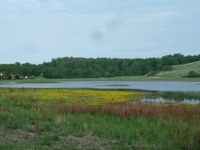
SE22The Tullstorp stream is a 30 km long stream located in the southern plains of Sweden (Skåne County) in an area with highly fertile land, with large agricultural production. From the nineteenth century onwards, the agricultural area gradually increased (it now constitutes 85% of the surface of the river basin) alongside with the decrease of the wetlands historically present in the area. As part of the agricultural development, Tullstorp Stream was channelized at the beginning of the 1900s. In 2009, the ecological state of the river had been classed as “bad” according to the EU Water Framework Directive, requiring large restoration interventions to achieve the good ecological state by 2027. The recent extreme weather events, with an extremely wet period during summer and autumn of 2017 and water scarcity in summer of 2018, presented new challenges for the agriculture in the Tullstorp river basin, requiring new integrated management of water resource in the face of climate change. Though projected milder temperatures can provide benefits for agriculture due to an extended growing season especially in Northern Europe, extreme weather events, with heat waves, floods and storms are expected to cause severe damages to crops across all European countries ( EEA, 2019 ). Droughts will increase the need of irrigation, and this can cause conflicts for water use among landowners and with other water users. Moreover, more abundant precipitation is expected to increase pressure on the drainage facilities of the soil in use for agriculture.
The main aim of the first Tullstorp restoration project (started in 2009) was to reduce nutrient loads to the Baltic Sea, improve the ecological status of the stream, solve flooding problems, and facilitate the overall management of the stream by landowners. Secondary objectives were the increase in biodiversity and enhanced opportunities for recreation. In response to the adverse weather events occurred in 2017-2019, the Tullstorp stream 2.0 project (started in 2019) enlarged the initial scope of the first project to take into account the effects of climate change on the agricultural area more specifically, counteracting the problems of an increasingly vulnerable water resource, with floods alternating to severe drought periods. The main aim of Tullstorp stream 2.0 project is therefore to create multifunctional wetlands to store excess water and to “harvest” it from the storage in a recirculating irrigation system during periods of water scarcity. The overall goal of the entire project (Tullstorp stream project and Tullstorp stream project 2.0) is to achieve both ecological and economic benefits for the landowners increasing the overall resilience of the territory to the impacts of climate change.
The first Tullstorp stream project included measures as re-meandering, re-naturalising the riverbed, creating flood storage areas, creating and restoring buffer strips and wetlands. The project goal to achieve a 200 ha surface of wetlands was met in 2021: over 50 wetlands were created or restored and 25 km of the stream was restored as well. To date, the project has reduced the nitrogen content of the river by 30 % and the phosphorus content by 50 %. The second Tullstorp stream project (Tullstorp stream project 2.0) focusses on a system that combines: (i) multifunctional water reservoirs, (ii) recirculating irrigation and (iii) customized drainage system to adapt agricultural production to extreme weather. Multifunctional water reservoirs in this project are defined as wetland systems that are primarily created to store surface water and nutrients so that the stored water can be used as a new water source for irrigation. Wetlands are typically multifunctional since they provide a variety of ecosystem services including regulation of water flow, biodiversity preservation, eutrophication control and carbon sequestration. Recirculating irrigation is a system that returns the most possible volume of surface water and nutrients stored in a multifunctional reservoir to grow crops by minimizing energy consumption and water consumption. Customized drainage is a system that, based on the physical conditions and drainage requirement, utilizes as much as possible the surface water and nutrients that the recirculating irrigation and the natural rainfall provide to the field. Within the Tullstorp stream project 2.0, a pilot intervention is underway to restore existing former sugar mill ponds that are fed with water from the drainage system, from storm water and from the Tullstorp stream. A monitoring programme is ongoing to assess the effects of the first Tullstorp stream project. A sampling site, located in the lower part of the project area is used to assess the overall impacts of the interventions. Monitoring includes river flow, water quality, and zoo-benthos communities. Fish surveys are also conducted annually in five to seven river stations. The complete evaluation of the effectiveness of the pilots ongoing within the Tullstorp stream project 2.0 will be crucial to support future full-scale implementation.
Storing excess water during wet periods for use during dry periods is expected to be a highly effective and sustainable way of climate proofing Swedish agriculture. The choice to use multi-functional wetlands to achieve this climate-related goal offers multiple benefits such as eutrophication reduction, biodiversity improvement, more space for nature and increased opportunities for recreation. Synergies with climate change mitigation are also achieved, due to an expected reduced energy consumption for irrigation and due to the carbon sequestration potential offered by wetlands. Economic and societal benefits are finally derived, since crops can better resist to drought and intense rainfall periods and landowners can rely on a better managed water resource. More in general, the holistic approach at the basis of the project helps to achieve the environmental quality goals of the EU Water Framework Directive as well as of the EU Farm to Fork strategy allowing the production of more food sustainably managing water resources. The first Tullstorp project cost about 60 million SEK (about 6 million euros). The project is mainly funded by the County Administrative Board of Skåne. Funding for the pre-study and pilots of the Tullstorp stream project 2.0 were granted by LOVA grant (local water management projects) of the County Administrative Board of Skåne, WWF and Region Skåne. The cost of the pre-study is 0,5 million SEK and the cost of the pilot-project (including management, method development and pilot implementation) is about 10 million SEK (about 1 million euros).
The opportunity to achieve multiple goals (ecological, economic, and social benefits) through a holistic approach is the key success factor of the project that motivated landowners to actively participate in the project. The bottom-up approach undertaken in this initiative, strongly supported and encouraged by stakeholders, gave a strong sense of ownership and facilitated project approval and implementation. Landowners were also encouraged to participate in the project since they received financial compensation for the areas included in the restoration of the stream and subsidies for the areas included in wetland restoration. The Economic Association that led the project is currently assisting the landowners in another catchment area ( Ståstorp Stream ), to use the Tullstorp method for the restoration of their stream, thus demonstrating the transferability potential of the project to other areas suffering from similar challenges. The main challenge is the funding. These measures are in fact quite costly and the current funding system in Sweden (through Landsbygdsprogrammet - Rural District Programme) can support only actions like river and wetland restoration but not yet the construction of water retention basins and irrigation systems. After the completion of the pilot ongoing within the Tullstorp stream project 2.0, the identification of public funding will be crucial to support the full-scale implementation of the project. Other challenges are related to the long time needed to complete all interventions that is hard to be accepted by participants and is dampening the initial enthusiasm.
Los detalles de implementación (coste, plazo, personal, condiciones para el éxito) aún no están disponibles para esta práctica.
National / regional programmes
Vías de financiación indicativas para prácticas de este tipo: compruebe siempre las convocatorias vigentes y las reglas de elegibilidad de cada programa.
¿Usted implementa esta práctica? Reivindíquela — los implementadores verificados obtienen un contacto público en la página y pueden proponer correcciones.
De dónde se obtuvo la información de esta práctica, y cuándo.
Italia
None
Estados Unidos
Desde 1986, Minnesota paga a los propietarios un pago único por servidumbres que retiran de la producción tierras de cultivo …
Sri Lanka
La red de riego en cascada de 2.000 años de Sri Lanka, designada sistema de patrimonio agrícola por la FAO …
Malta
La empresa pública de Malta trata aguas residuales en Ta' Barkat y Sant'Antnin para producir «New Water» destinada a unas …
Abrir el copiloto completo Basado en prácticas citadas: comprueba siempre las fuentes.