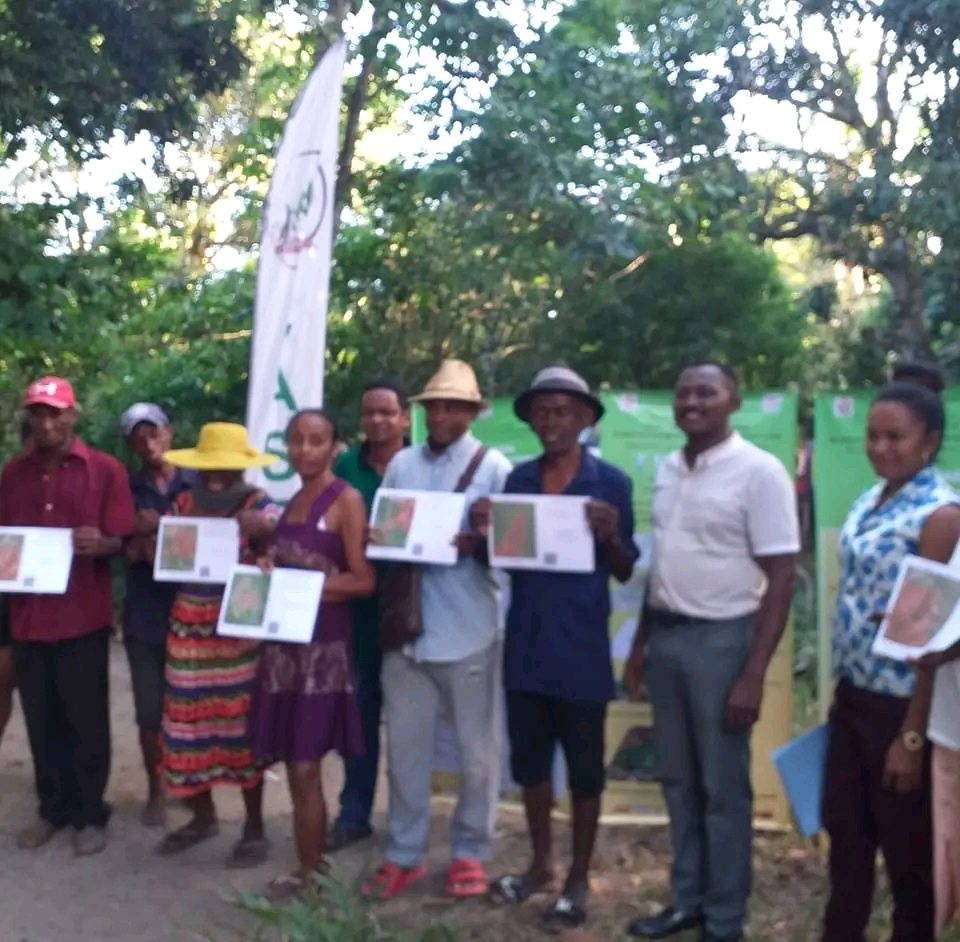
El programa CASEF de Madagascar (47 millones de dólares, 2016–2024) redujo el coste de un título de tierra de unos 600 a 25 dólares y emitió más de 570.000 títulos, el 28% a mujeres — por debajo de la meta del 40%.
47 USD million
Presupuesto del programa
~600 USD
Costo de un certificado de tierra, antes
~25 USD
Costo de un certificado de tierra, después
>570,000
Certificados de tierra emitidos (by late 2023)
~660,000
Solicitudes adicionales en trámite (by late 2023)
~300,000
Hogares alcanzados (estimación)
28 %
Certificados otorgados a mujeres o titulares conjuntos (vs. 40% target)
90 %
Titulares de certificados que reportan derechos ahora reconocidos
80 %
Titulares que reportan un aumento del valor percibido de la propiedad
56 %
Titulares que reportan inversión en producción de más largo plazo
Detalles
Madurez
Descontinuada
Promotor
World Bank (IDA), with Madagascar's Ministry of Agriculture and Livestock and Ministry of Land Management and Land Services
Período
2016–2024
Palabras clave
land rights, women's economic empowerment, property rights, agriculture
Contexto
CASEF (Croissance Agricole et Sécurisation Foncière) fue un programa de certificación de tierras financiado por el Banco Mundial (IDA) por un valor de 47 millones de dólares (2016-2024), ejecutado junto con el Ministerio de Agricultura y Ganadería y el Ministerio de Ordenamiento Territorial y Servicios de Tierras de Madagascar, en 14 de las 23 regiones del país.
Objetivos
El programa buscaba formalizar los derechos sobre la tierra de los pequeños agricultores mediante la digitalización y descentralización de la emisión de certificados a través de oficinas locales de tierras (guichets fonciers), reduciendo el costo de obtener un documento de propiedad, y fijó una meta explícita de que el 40% de los certificados se emitieran a nombre de mujeres, de forma individual o conjunta, con el fin de reducir la brecha de género en el acceso a derechos sobre la tierra.
Actividades
Las oficinas locales de tierras se descentralizaron y digitalizaron para emitir certificados a un costo mucho más bajo que antes.
Resultados
Cerca del cierre del programa, a finales de 2023, se habían emitido más de 570.000 certificados de tierras (con aproximadamente 660.000 solicitudes adicionales en trámite), alcanzando a un estimado de 300.000 hogares; el costo promedio de un documento de tierra bajó de unos 600 a unos 25 dólares. El 28% de los certificados se otorgó a mujeres o como titularidad conjunta, sin alcanzar la meta del 40%. Encuestas a beneficiarios realizadas por el Banco Mundial mostraron que el 90% de los titulares de certificados sentía que sus derechos ya estaban reconocidos, el 80% reportó un aumento en el valor percibido de la propiedad, y el 56% afirmó haber invertido en producción de más largo plazo (por ejemplo, árboles frutales) como resultado. Reportajes independientes (Témoignages, Helvetas) corroboraron el número de certificados, pero constataron que muchas comunas nunca llegaron a tener una oficina de tierras en funcionamiento, y que los jefes locales de Fokontany a menudo favorecían a los hombres frente a las mujeres, incluso donde existía la certificación.
Conclusiones
El proyecto concluyó en junio de 2024 sin que se identificara ninguna financiación de continuidad confirmada, lo que ilustra que los avances jurídicos formales sobre el papel no se tradujeron de manera uniforme en un acceso práctico equitativo para las mujeres.
Implementación
Los detalles de implementación (coste, plazo, personal, condiciones para el éxito) aún no están disponibles para esta práctica.
Habitualmente financiado por
National / regional programmes
Vías de financiación indicativas para prácticas de este tipo: compruebe siempre las convocatorias vigentes y las reglas de elegibilidad de cada programa.
¿Usted implementa esta práctica?
Reivindíquela —
los implementadores verificados obtienen un contacto público en la página y pueden proponer correcciones.
Fuentes de datos
De dónde se obtuvo la información de esta práctica, y cuándo.
Etiopía (1998-2021) dio certificados de tierra conjuntos (nombres/fotos de ambos cónyuges) a millones de hogares. Seguridad territorial percibida por mujeres: …