Saltmarsh recreation by managed realignment, Hesketh Out Marsh – UK
Reino Unido
Reino Unido · Ver el perfil de Reino Unido
Evidencia: Observacional / pre-post · Pregunte a Evidence Copilot sobre esta práctica
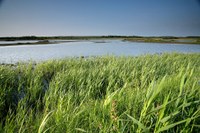
England’s eastern coast is rich in birdlife but under considerable pressure from climate-induced sea-level rise, isostatic change and coastal erosion. According to the "Norfolk Coast AONB Climate Change Strategy" local sea level will continue to rise with maximum estimates relative to 1980‐1999 varying from 68cm (UKCP09 scenario) to more than 80cm by the end of the current century. This leads to “coastal squeeze” where intertidal habitats are prevented from migrating landwards due to the presence of sea walls and increased threat to internationally important coastal freshwater habitats. Government policy on shoreline management tends to favour management solutions that respect natural processes and adapt to coastal change. The RSPB (Royal Society for the Protection of Birds) reserve at Titchwell Marsh in north Norfolk is such a case where there is an imminent risk of habitat loss.
The main goal of Titchwell Marsh Coastal Change Project was to provide flood defences for designated freshwater habitats in the short, medium and long term, whilst minimising impacts on the designated habitats outside the flood defences. Project objectives focused on: Protecting freshwater habitats from coastal erosion destruction; and Mitigating/compensating for the inevitable loss of important brackish marsh.
The project implemented a “managed realignment” scheme at Titchwell Marsh in response to climate change related sea level rise and increased erosion. The project included the strengthening of the existing western wall and the construction of a new wall (the Parrinder wall). These two walls aim to protect the freshwater habitats for at least the next 50 years. In addition, the project created a breach in the sea wall to connect the brackish marsh to the tidal saltmarsh to the east. The breach was located to tie into existing saltmarsh creeks. This allows the sea to enter into the brackish marsh, which turned back to tidal saltmarsh: the brackish marsh frequently flooded with the tide, allowing it to develop into saltmarsh and mudflats. These habitats are not only attractive to birds, but they act as sea defence in their own right and play a significant role in protecting the new Parrinder wall. The brackish marsh supported an important number of breeding avocet, a designated feature of the North Norfolk Coast SPA. To offset the loss of avocet nesting habitat following the managed realignment, additional nesting islands were created in the freshwater marsh at Titchwell (mitigation) and additional new avocet nesting habitat was created at the RSPB’s nature reserves at Frampton Marsh and Freiston Shore (compensation). The project acts as a good example of using mitigation and compensation in the context of Natura 2000. At the end of 2011, the work on the sea walls (including strengthening of the western wall, construction of the new Parrinder Bank and the breaching of brackish marsh) was completed. Freshwater habitats are now protected by 5.8m AOD (Above Ordnance Datum) sea defences with a flood defence standard of 1 in 30 years. This should be sufficient to protect the site for the next 50 years until less erosive coastal environment exist at Titchwell. The coastline at Titchwell Marsh currently sits on a sediment drift divide where longshore drift removes sediment in a westerly direction and local currents driven by the presence of the Scolt Head barrier beach system to the east of Titchwell remove sediment in an easterly direction. The barrier beach system at Scolt Head has been expanding in westerly direction for many years and it is predicted that as Scolt Head continues to expand west, the erosive point will pass Titchwell. The area from which the materials for the new Parrinder sea wall were excavated was land-formed; water control structures were installed to create an additional 2.4ha of reedbed habitat. The creation of a new reedbed in this area was an important side benefit of the project. By the end of the project, reed had started to naturally colonise the area. The maceration of encroaching reed using a previously untested technique was also extremely successful. The area previously covered by reed has been colonised by curled dock which has provided additional sources of seed food for wintering waterfowl. Repeated treatment is required every five to ten years, depending on the rate of reed re-growth. The installation of the fresh-marsh sluice with twice the capacity of the old one has enabled water levels to be managed more dynamically than was possible before. The move from a drop-board to a tilting weir sluice also allows to manage water levels more precisely so that the ideal water levels for passage wading birds can be achieved. An additional side-benefit of the works is that it was possible to extend the visitor trails around the new area of reedbed.
Half of the cost of the project was covered by the European Commission, through its LIFE+ financial instrument. Additional funding was provided by Waste Recycling Environmental Ltd (WREN), SITA Trust and the Crown Estate. The project total budget was 2,009,660.00 € with a EU contribution of 1,004,830.00 €. An important co-benefit of the project was the creation of a new reedbed habitat which provided additional habitat for species such as the waterfowl as well as an extended route of the visitor trails. In addition, the new fresh-marsh sluice enables to manage water levels more dynamically.
Factors decisive for a successful outcome of the project includes: A clear understanding of the coastal processes affecting Titchwell Marsh was critical in determining the most appropriate solution to the problem. Working with, not against, coastal processes was vital in gaining the support of Natural England and the Environment Agency. Investment in local consultation and communication was essential in securing planning consent. No objections were received from the local community. Appointing experienced contractors who understood the challenges of working in an environmentally sensitive site. Due to the breeding and wintering bird interest at Titchwell, construction work could only take place within a three month window (August, September & October) where disturbance could be minimised. This meant that the project took three years to deliver and the working window coincided with the busiest period for visitors thus impacting on visitor numbers and business performance.
Los detalles de implementación (coste, plazo, personal, condiciones para el éxito) aún no están disponibles para esta práctica.
LIFE Programme National / regional programmes
Vías de financiación indicativas para prácticas de este tipo: compruebe siempre las convocatorias vigentes y las reglas de elegibilidad de cada programa.
¿Usted implementa esta práctica? Reivindíquela — los implementadores verificados obtienen un contacto público en la página y pueden proponer correcciones.
De dónde se obtuvo la información de esta práctica, y cuándo.
Reino Unido
Reino Unido
Tres millones de toneladas de tierras del Crossrail elevaron terrenos agrícolas antes de abrir la brecha en 2015. La RSPB …
Rumanía
Cuenca de ~183 ha abandonada en 1989 y renaturalizada: 138–175 especies de aves, primer parque natural urbano de Rumanía (UICN …
Australia
Tras el control con herbicida, financiado por el Gobierno australiano, de la Spartina anglica invasora en Duck Bay, las especies …
Abrir el copiloto completo Basado en prácticas citadas: comprueba siempre las fuentes.