Top 39%
dans ce catalogue (1071 pratiques notées)
Les scores se concentrent dans le haut de l’échelle ; la position au sein du catalogue est donc souvent plus parlante que le chiffre seul.
Evidence of impact / measured results1/3
Ridership (300,000/day target), travel-time (95→45 min) and emissions figures come from World Bank appraisal/project documentation, which itself notes these indicators need a multi-month ramp-up to reach target values — projections, not yet verified operating results.
Transferability / demonstrated replication2/3
Explicitly framed by ITDP as a replicable model for other African cities, extending the BRT format (pioneered in Curitiba) to a fully electric configuration in a new region.
Scalability2/3
An 18.3km corridor with a 144-bus fleet engineered for up to 300,000 daily passengers between Dakar and Guédiawaye.
Sustainability / continuity2/3
Funding blends World Bank/EIB infrastructure financing, a MIGA guarantee, and a 15-year government fare-subsidy commitment, though the operating consortium's long-run financial sustainability is unproven this early.
Innovation3/3
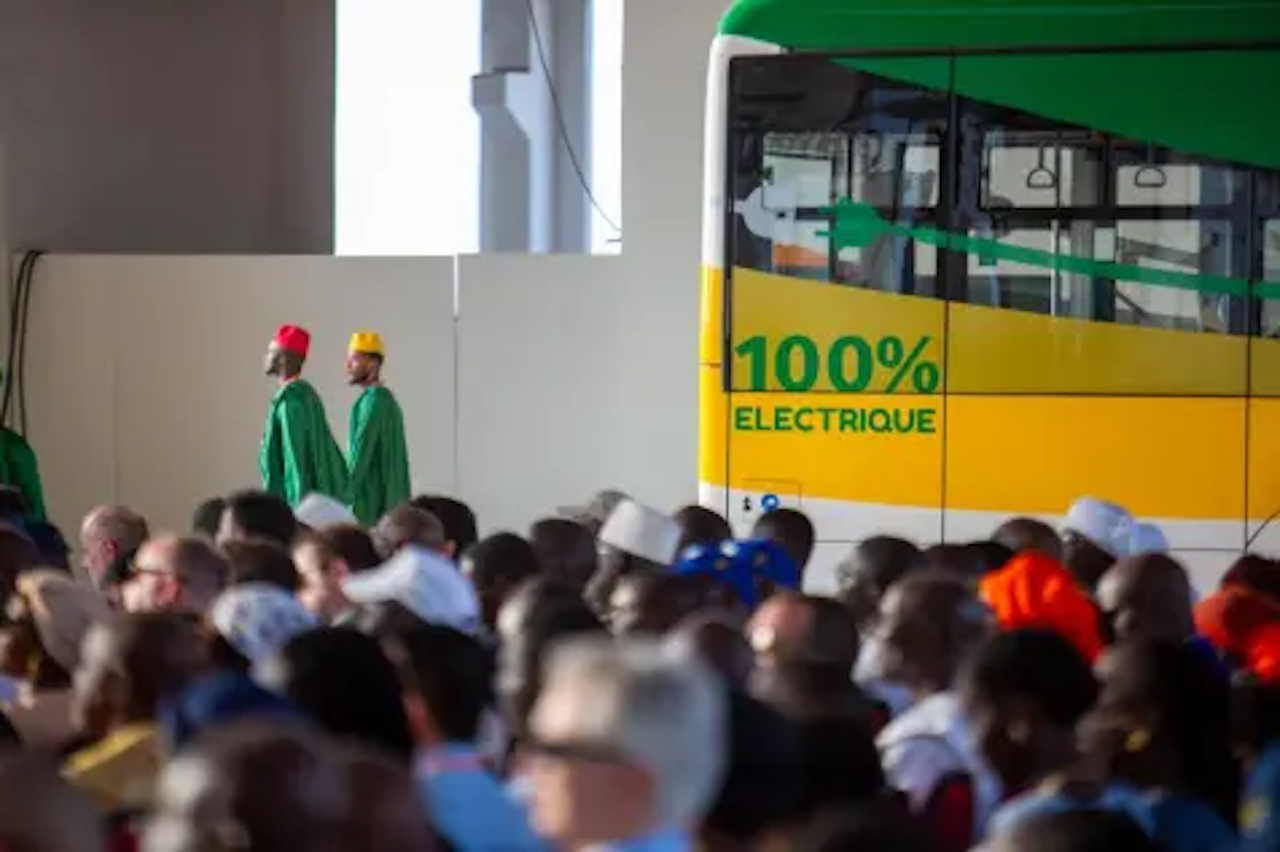
The first fully electric BRT fleet in Sub-Saharan Africa, combining a novel blended-finance structure with battery-electric articulated buses.
Inclusiveness / equity2/3
Connects central Dakar to Guédiawaye, a lower-income suburb, with government-subsidised fares intended to keep the service affordable.
Multi-stakeholder collaboration3/3
Structured as a multi-party deal among the World Bank, European Investment Bank, MIGA, the Senegalese government and the private Dakar Mobilité consortium.
Evidoria. Le BRT électrique de Dakar — Premier corridor de bus à haut niveau de service entièrement électrique d'Afrique subsaharienne. ID persistant: 0d4264f7-9458-4aa0-a147-6aacd2cc5c28.