GRASS — Verified Carbon Revenue Reaches Communal Rangeland Farmers in South Africa
South Africa
TASC and Meat Naturally Africa's GRASS project issued 266,255 Verra VM0042/CCB-certified carbon units for regenerative grazing on 95,000+ ha of …
France · Amiens · See the France profile
Top 89% 27/100 · Ask Evidence Copilot about this practice
A five-year pilot pays 30 sugar-beet and flax farmers in France's Hauts-de-France and Normandy regions for biodiversity-friendly practices, scored on a 17-theme methodology and pre-funded by La Banque Postale, Dior and Norsys.
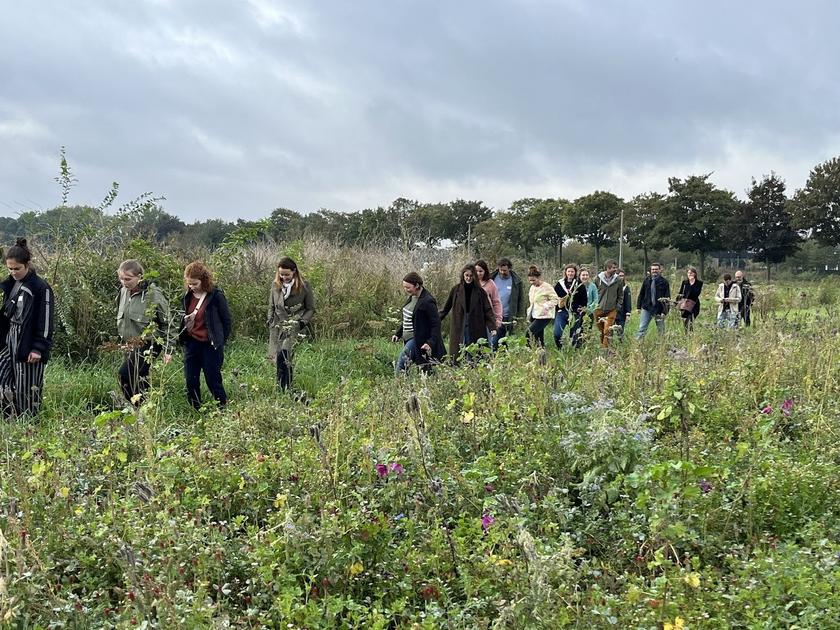
Agoterra, a French impact-finance company, and Noé, a French biodiversity NGO, launched in early 2026 a five-year pilot under the Organization for Biodiversity Certificates (OBC) framework, covering 30 farmers across the Hauts-de-France and Normandy regions, mainly on sugar-beet and flax rotations. Certificates are generated through a methodology the organisers say is validated by an independent expert committee and aligned with the European Commission's emerging "Nature Credits" approach.
Farms are scored across 17 practice themes covering habitat and infrastructure measures (hedgerows, temporary grasslands, buffer strips, ponds, agroforestry) and production-system changes (tillage, crop diversification, pesticide use), each with up to five implementation levels tied to a defined biodiversity-gain score. Corporate buyers La Banque Postale, Dior and Norsys have pre-committed funding, but because the pilot only began in 2026, on-the-ground biodiversity outcomes have not yet been measured; organisers deliberately use the term "certificates" rather than "credits" to avoid implying compensation for prior environmental damage.
Read the full analysis: https://www.reussir.fr/credits-biodiversite-agoterra-et-noe-lancent-les-premiers-certificats-dans-lagriculture
Implementation detail (cost, timeline, staffing, conditions for success) is not yet available for this practice.
Do you run this practice? Claim it — verified implementers get a public contact pathway and can propose corrections.
Where this practice's information was retrieved from, and when.
South Africa
TASC and Meat Naturally Africa's GRASS project issued 266,255 Verra VM0042/CCB-certified carbon units for regenerative grazing on 95,000+ ha of …
Brazil
Since 2020, Brazil's CONSERV programme has paid Amazon/Cerrado landowners ~$50-79/hectare twice yearly to conserve legally clearable forest, protecting over 30,000 …
Burkina Faso
From 1980, farmer Yacouba Sawadogo revived zaï planting pits in Burkina Faso's Yatenga province, helping plots reach ~1,500 kg/ha of …
China
World Bank-financed terracing, afforestation and grazing bans across 1.56M ha of China's Loess Plateau (1994-2002) cut Yellow River sediment by …
Open full copilot Grounded in cited practices — always check the sources.