DETER — INPE's Near-Real-Time Satellite Alerts Powering IBAMA's Amazon Deforestation Enforcement
Brazil
INPE's DETER system issues near-real-time satellite alerts on forest clearing across the Amazon and three other biomes, letting IBAMA dispatch …
Romania · Bucharest · See the Romania profile · See the Bucharest profile
Evidence: Observational / pre–post Top 62% 53/100 · Ask Evidence Copilot about this practice
Romania's Environment Ministry piloted Google Vertex AI on its SUMAL 2.0 timber-permit system, scanning 400,000 monthly permits and 1.6M photos in three days, triggering 7 criminal probes and $930,000+ in fines — though it still misses subtler photo fraud, OCCRP found.
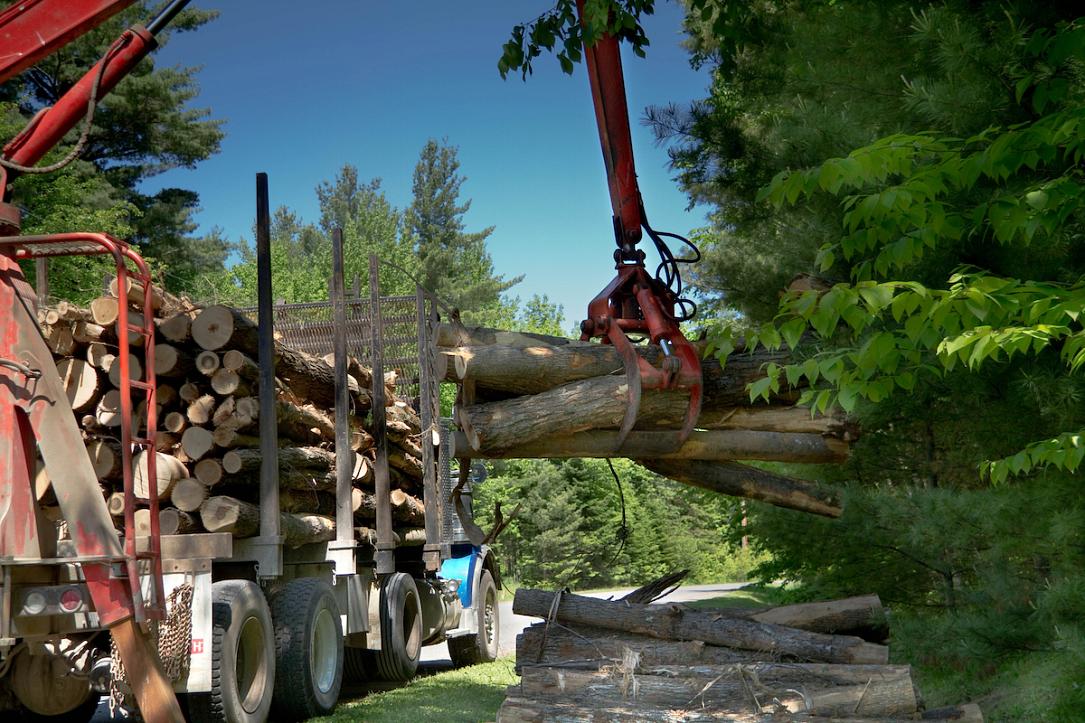
Since January 2021, Romania's Ministry of Environment, Waters and Forests has required all timber transport to be logged in SUMAL 2.0, with drivers photographing loads and permits in real time and the system cross-checking against satellite forest-change alerts updated every 2-7 days. Investigative reporting found haulers were reusing old photos to fake compliance.
In November 2023 the Ministry partnered with Google Cloud and Zitec to pilot Google Vertex AI for automated scanning of permit photos, aiming to detect fraudulent or reused images at a scale beyond manual review capacity.
The AI pilot processed roughly 400,000 monthly permits and 1.6 million photos in three days (about 0.64 seconds per permit), equivalent to the workload of around 125 additional human reviewers alongside the Forest Guard's approximately 200 staff; the Ministry has since pursued an €8.9 million follow-on tender, partly funded through Romania's EU recovery plan, for licence-plate recognition cameras and LiDAR.
The pilot generated enough suspicious cases to trigger 7 criminal investigations and fines/confiscations exceeding $930,000; over a broader two-year enforcement period, SUMAL monitoring detected more than 2,000 fraudulent transports, €2 million in fines and €1.6 million in confiscated wood. Investigators found the AI reliably caught blatant fakes but struggled with sophisticated fraud such as genuine wood photos reused across different loads.
AI-assisted screening added a scalable fraud-detection layer to an existing wood-tracking system, but its accuracy is limited against sophisticated fraud, and the Ministry is now investing in complementary camera and LiDAR technology rather than relying on photo analysis alone.
National / regional programmes Recovery and Resilience Facility (national plans)
Indicative funding routes for practices of this type — always check each programme's current calls and eligibility rules.
Do you run this practice? Claim it — verified implementers get a public contact pathway and can propose corrections.
Where this practice's information was retrieved from, and when.
Brazil
INPE's DETER system issues near-real-time satellite alerts on forest clearing across the Amazon and three other biomes, letting IBAMA dispatch …
Peru
A University of Sheffield machine-learning system detects illegally logged trees from very-high-resolution satellite imagery, cross-checked against Peru's forestry registers. OSINFOR …
Gabon
WWF and Wageningen University's Forest Foresight uses Sentinel-1 radar and ML to flag illegal-logging and mining risk months ahead. Gabonese …
Brazil
Brazil's National Council of Justice runs Sinapses, a national catalogue where all AI models used or developed by the Brazilian …
Open full copilot Grounded in cited practices — always check the sources.