MentorIA Perú — NGO-Led AI Teacher Capacity-Building with Measured Knowledge Gains
Peru
MentorIA Perú, run by Empresarios por la Educación and Fundación Kodea with Google.org funding and MINEDU support, trained 1,300+ teachers …
Uruguay · Montevideo · See the Uruguay profile · See the Montevideo profile
Evidence: Descriptive / self-reported Top 40% 53/100 · Ask Evidence Copilot about this practice
Uruguay's Ceibal and ANEP run a tiered national AI teacher-training pipeline: 900+ teachers completed courses and 150+ earned a postgraduate certificate in 2025, within a program reaching 10,000 teachers and 205,000 students, anchored by the 2025 World Bank/IDB EduIALab hub.
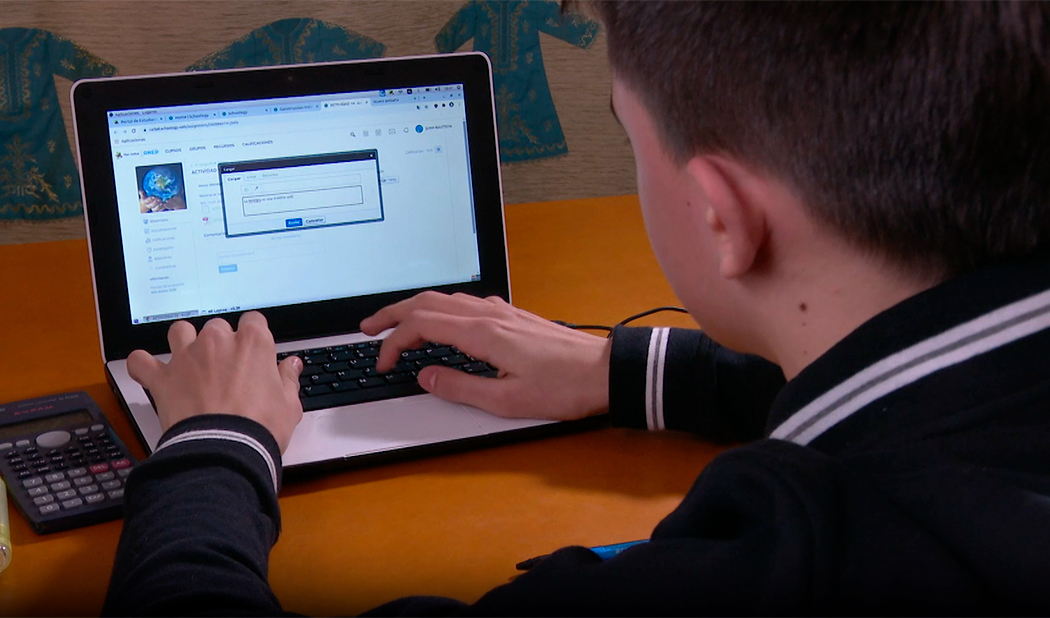
Fundación Ceibal, Uruguay's national one-to-one education-technology agency, and ANEP, the national public-education administration, built a tiered AI teacher-training pipeline sitting inside Ceibal's wider 'Pensamiento Computacional e Inteligencia Artificial' programme.
The pipeline aims to build teacher capability in AI tools at multiple tiers, from lighter-touch course completion up to a postgraduate certificate, building on Ceibal's near-universal one-to-one laptop and connectivity infrastructure.
Per a 2025/2026 government report, more than 40 training sessions were run; in May 2025 Ceibal, the World Bank, the Inter-American Development Bank and Canada's IDRC also launched EduIALab, a regional hub anchored in Uruguay to develop and share AI-in-education tools across Latin America and the Caribbean.
Over 900 teachers completed and passed AI-related courses and more than 150 teachers earned a postgraduate certificate (postítulo) in AI, within Ceibal's wider programme that the World Bank reports reaching roughly 10,000 teachers and 205,000 students across 85% of urban public schools.
The figures come from two different aggregation levels, a national government communication on the postgraduate/course pipeline and World Bank programme-level figures for Ceibal's broader AI-education portfolio, and neither is independently audited; the 150+ postgraduate-certificate cohort is small next to Uruguay's roughly 40,000-strong teaching workforce, so the credentialing pathway remains an early-stage, elite tier above much larger, lighter-touch training.
National / regional programmes
Indicative funding routes for practices of this type — always check each programme's current calls and eligibility rules.
Do you run this practice? Claim it — verified implementers get a public contact pathway and can propose corrections.
Where this practice's information was retrieved from, and when.
Peru
MentorIA Perú, run by Empresarios por la Educación and Fundación Kodea with Google.org funding and MINEDU support, trained 1,300+ teachers …
Vietnam
Vietnam's Ministry of Education and Training and RMIT University Vietnam ran a free national online AI-training series in 2025 that …
Kazakhstan
Kazakhstan's Orleu teacher-training agency, with UNESCO IITE and UNESCO-ICHEI, ran a free national generative-AI micro-certification for teachers: by Nov 2025, …
Tajikistan
Tajikistan, UNESCO and EU funding built a 3-tier ICT Competency Standards for Teachers framework with a dedicated AI-ethics course, under …
Open full copilot Grounded in cited practices — always check the sources.