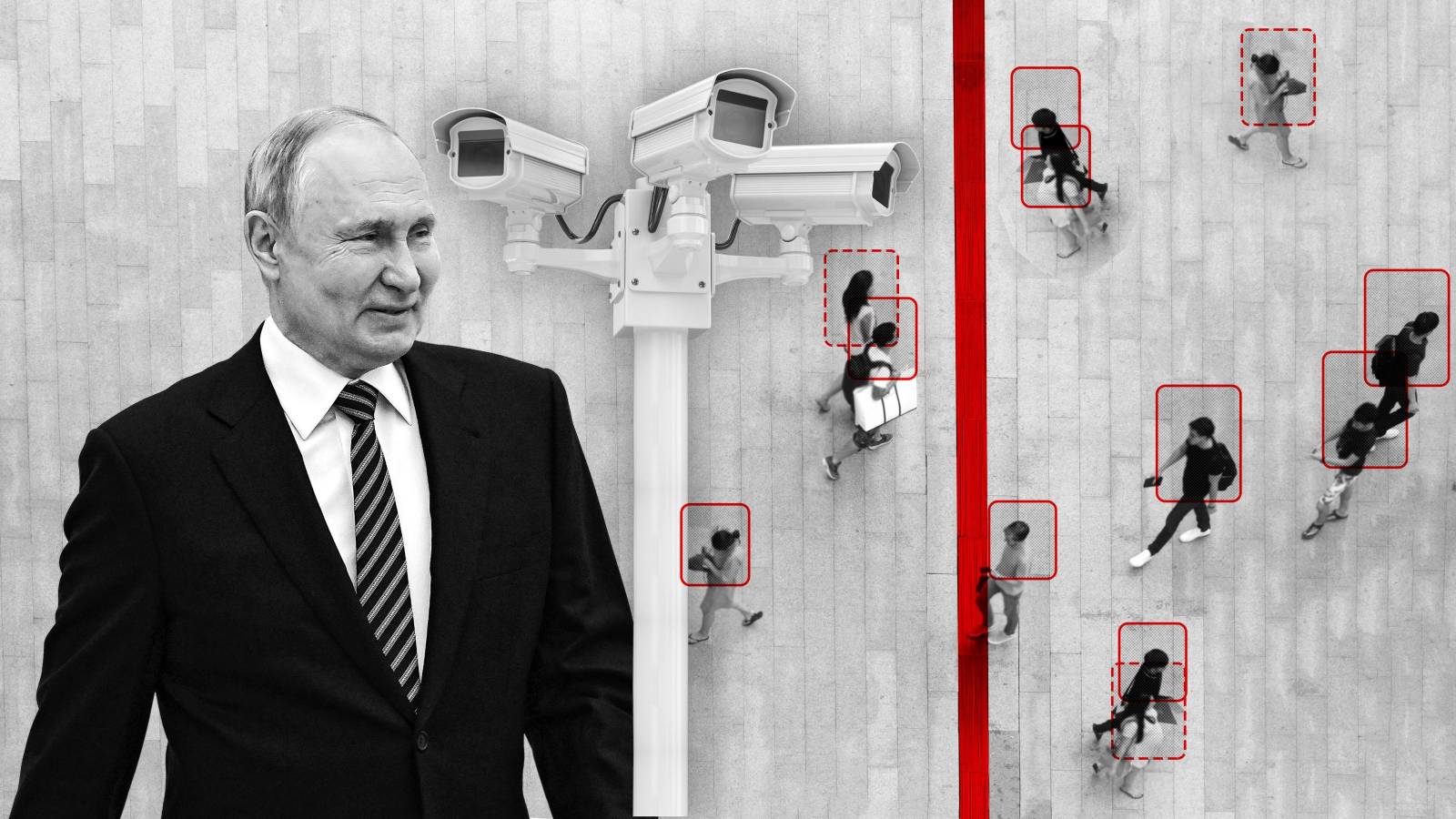
Moscow connected roughly 230,000 cameras to a citywide AI facial-recognition system pitched for public safety; leaked budget documents show over $121m earmarked for 2024-2026, while Reuters and rights groups document its use to detain protesters and conscription objectors.
230,000 cameras
Cameras connected to the facial-recognition system
Court cases reviewed showing the network's role in arrests
2017
System switched on
Details
Maturity
Established
Promoter
City of Moscow Department of Information Technologies, with NtechLab
Period
2017–2026
Keywords
video surveillance, facial recognition, law enforcement, public safety
Context
Moscow switched on facial recognition across its municipal CCTV network in 2017 and, by the mid-2020s, had connected roughly 230,000 cameras — one of the largest urban surveillance systems in the world — to a unified AI identification platform built with technology from NtechLab, publicly framed around traffic safety and general law enforcement.
Results
Leaked Russian government planning documents reviewed by the investigative outlet VSquare show the state intends to spend more than $121 million between 2024 and 2026 to expand the system's capability, with no public disclosure of accuracy rates, error rates or independent audits. Reuters reviewed more than 2,000 court cases showing the camera network's role in arrests of protesters, including at anti-war demonstrations, and in October 2025 the rights group Civil Alliance of Russia reported that Moscow police were using facial recognition specifically to detain men who had legally challenged their military conscription orders.
Conclusions
No independent oversight body publishes audits of the system's accuracy, error rates or use. The documented pattern — expansion funded through non-transparent budget lines, deployed against protesters and draft objectors rather than only traffic offenders — represents a governance failure mode for AI-enabled public surveillance rather than a practice to replicate.
Implementation
Indicative cost
Very high (> €5M) — Leaked planning documents show over $121 million earmarked for system expansion between 2024 and 2026
Time to results
Long (> 3 years) — Facial recognition switched on across the CCTV network in 2017; expansion budgeted through 2026
Staffing & skills
City of Moscow Department of Information Technologies (system operator), NtechLab (private facial-recognition technology vendor)
Conditions for success
A large pre-existing municipal CCTV network and centralised city IT authority allowed rapid connection of roughly 230,000 cameras
A single private AI vendor (NtechLab) supplying the recognition engine enabled uniform city-wide deployment
Common failure modes
No independent body publishes audits of the system's accuracy, error rates or use
Expansion funded through non-transparent, leaked budget lines rather than public disclosure
Documented use to detain protesters and conscription objectors rather than only traffic offenders, per Reuters and the Moscow Times
Do you run this practice?
Claim it —
verified implementers get a public contact pathway and can propose corrections.
Data sources
Where this practice's information was retrieved from, and when.
Jamaica's Ministry of National Security operates JamaicaEye, a nationwide camera network combining government and voluntarily-registered private cameras with facial recognition, …
Guyana's police and e-government agency deployed camera-based speed/seatbelt detection with automated e-ticketing, later adding AI video analytics and a mobile …