Tartu Smart City Programme — EU Mission 100 pilot city
Estonia
Tartu retrofitted 17 Soviet-era blocks, deployed 65 e-bike stations, 60 biogas buses and 300+ smart LED lights, and ran the …
Sweden · Stockholm · See the Sweden profile · See the Stockholm profile
Evidence: Observational / pre–post Top 27% 76/100 · Ask Evidence Copilot about this practice
Sweden's largest urban development (236 ha, 12,000 homes, 35,000 workplaces) is a live testbed for sustainable building, smart energy, and clean mobility—targeting fossil-free operation by 2030, with energy use 26% below Swedish building code. C40 Climate Award, COP21 2015.
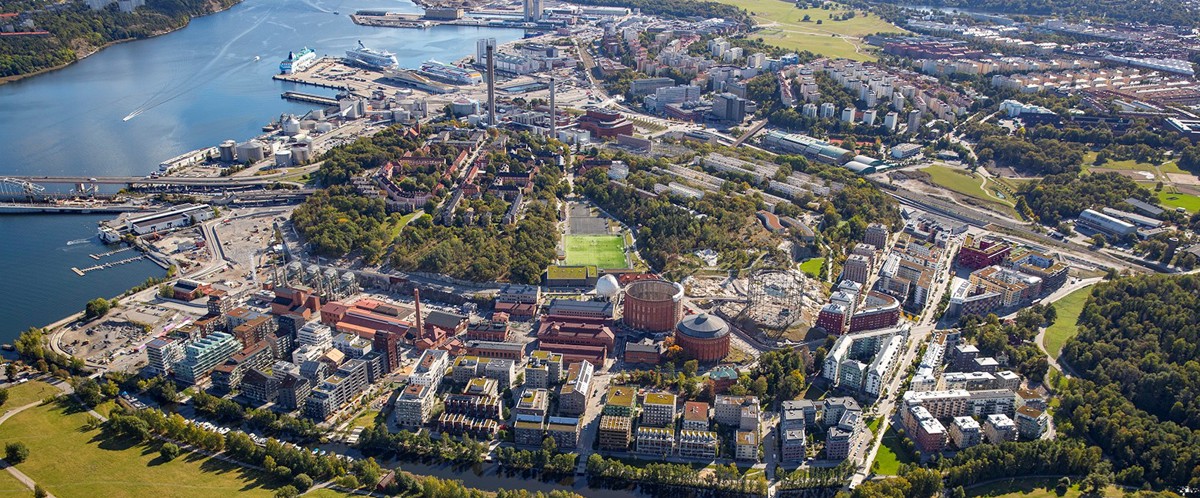
SE11Stockholm Royal Seaport (Norra Djurgårdsstaden) is Sweden's largest urban development, transforming a 236-hectare former industrial site ten minutes by bicycle from the city centre. Since 2011 the City of Stockholm has used the district as a live testbed for sustainable building, smart energy, mobility and stormwater technologies, with a planned 12,000 apartments and 35,000 workplaces at an investment of roughly USD 30 billion.
All buildings must meet a fossil-free operation target by 2030. Technologies piloted in the district include automated vacuum waste collection, a Smart Energy City monitoring pilot enrolling 154 households, a green-area factor system requiring a biodiversity score of at least 0.6 in the Norra 1 and Norra 2 sub-districts, and integrated stormwater systems using green roofs, ponds and wetlands.
Measured energy consumption in completed sub-districts averages 68 kWh/m² for residential buildings, 26% below the applicable Swedish Building Code requirement. An interim target set emissions below 1.5 tonnes of CO2 per person by 2020. The district received the C40 Cities Best Sustainable Urban Development award at COP21 in Paris in 2015.
Royal Seaport demonstrates that a large, publicly-led new-build district can be used to trial and measure sustainable urban technologies at scale, though its roughly USD 30 billion investment and greenfield setting limit direct replication to well-resourced cities with access to large development sites.
National / regional programmes ERDF — European Regional Development Fund LIFE Programme
Indicative funding routes for practices of this type — always check each programme's current calls and eligibility rules.
Do you run this practice? Claim it — verified implementers get a public contact pathway and can propose corrections.
Where this practice's information was retrieved from, and when.
Estonia
Tartu retrofitted 17 Soviet-era blocks, deployed 65 e-bike stations, 60 biogas buses and 300+ smart LED lights, and ran the …
Poland
Three-year Ministry-funded pilot (2019–2022) testing a participatory city-lab model in Gdynia and Rzeszów: residents co-design neighbourhood solutions validated in small-area …
Colombia
Medellín integrated cable-car lines and hillside escalators with neighbourhood upgrading to connect its poorest comunas to the city, cutting homicide …
Austria
Vienna's long-term, legally-binding smart-city strategy (first 2011, updated 2019/2022) aligning resource conservation, quality of life and social inclusion with annual …
Open full copilot Grounded in cited practices — always check the sources.