ALS Thuismeten & Coachen — Nationwide E-Health Home-Monitoring for Motor Neuron Disease
Netherlands
A nationwide Dutch e-health platform let people with motor neuron disease self-monitor mood, weight and function from home. 86 of …
Nepal · Lalitpur · See the Nepal profile · See the Lalitpur profile
Top 97% 32/100 · Ask Evidence Copilot about this practice
A Nepal-based disability-led organisation won AT2030 Frontiers seed funding in December 2025 to open wheelchair and assistive-technology repair hubs in all seven provinces, using 3D-printed spare parts to target an estimated 1,000 repairs where services are scarce.
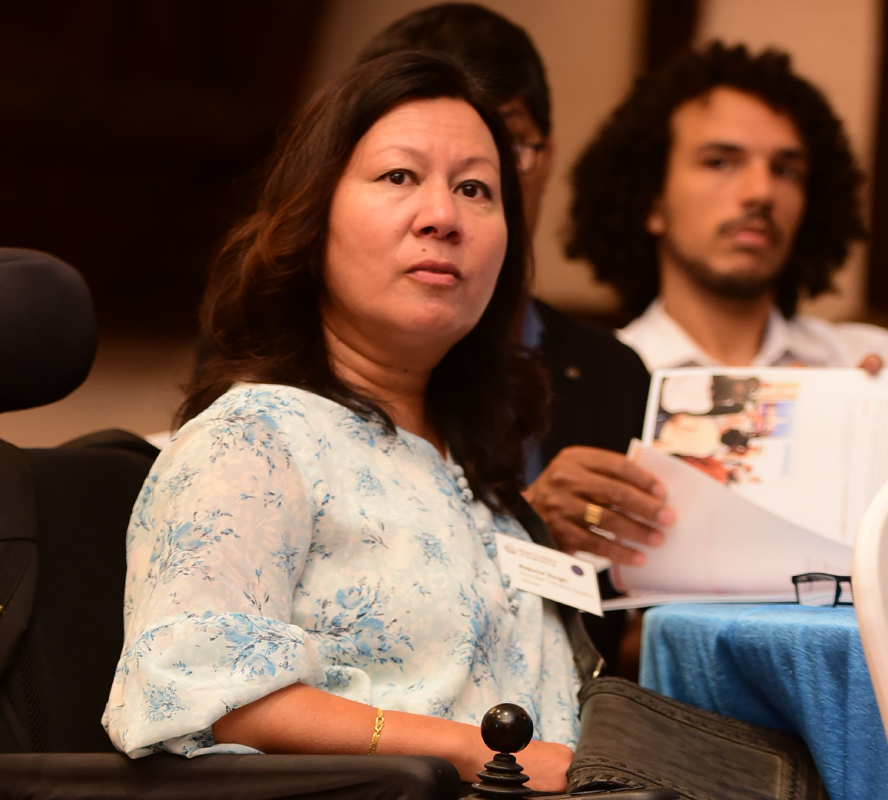
In Nepal, people with disabilities often face long delays and travel to repair wheelchairs and other assistive devices, because repair services are centralised, leaving much of the country - especially remote provinces - without reliable maintenance support.
Sundar Dhoka Saathi Sewa (SDSS), a disability-led organisation founded by wheelchair user Kosh Bilash Adhikari and based in Lalitpur, was awarded AT2030 Frontiers seed funding in December 2025, following an October 2025 symposium in Kathmandu run by the Royal Academy of Engineering and UCL's Global Disability Innovation (GDI) Hub. The project, led by Rajuna Singh, will set up repair and maintenance hubs in all seven of Nepal's provinces, 3D-printing spare parts locally and reusing reclaimed materials to customise mobility devices, in partnership with local NGOs and authorities.
The programme targets roughly 1,000 repair services and sits within AT2030, a programme funded by UK International Development.
As a newly seed-funded initiative awarded in December 2025, no completed evaluation or achieved-repair count has yet been published; the 1,000-repair figure is the programme's stated target, not a verified result.
Read the full analysis: https://raeng.org.uk/programmes-and-prizes/programmes/international-programmes/frontiers/funding/seed-funding/awardees-and-case-studies/seed-funding-awardees-inclusive-innovation-in-action/
Implementation detail (cost, timeline, staffing, conditions for success) is not yet available for this practice.
Do you run this practice? Claim it — verified implementers get a public contact pathway and can propose corrections.
Where this practice's information was retrieved from, and when.
Netherlands
A nationwide Dutch e-health platform let people with motor neuron disease self-monitor mood, weight and function from home. 86 of …
Kenya
A six-month AT2030 study by the Global Disability Innovation Hub gave 193 Deaf/hard-of-hearing and blind/partially-sighted Kenyans smartphones and accessibility-feature training, …
El Salvador
El Salvador's education ministry has folded computers with adaptive hardware and software for blind and low-vision students into its national …
India
Since 2005, Bangalore charity Mitra Jyothi has trained 1,000+ blind and low-vision adults in screen-reader computer literacy; a TCS partnership …
Open full copilot Grounded in cited practices — always check the sources.