HUGO (Helping U Get On-Line)
United Kingdom
Leeds Federated Housing Association (LFHA) developed HUGO (Helping U Get On-line), a digital inclusion programme that aimed to find the …
Hungary · Szeged · Transnational · See the Hungary profile · See the Szeged profile
Evidence: Observational / pre–post Top 82% 52/100 · Ask Evidence Copilot about this practice
Aims: - Older people will be involved in the society and find their role (as a trainer or trainee), in this way, they can preserve their health longer. - Elder people will be able to use modern ICT devices in their life, thus, they can keep contact with other people easier, admin
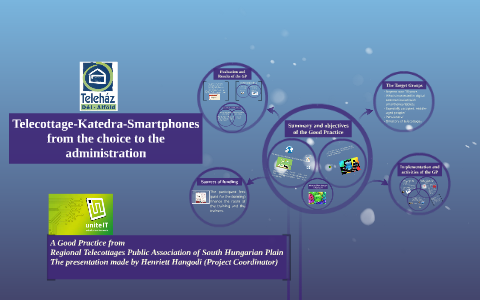
HU33Telecottage Katedra's smartphone/tablet training addressed the difficulty older people and other disadvantaged groups had in using or benefiting from smartphones and tablets: many useful applications went unknown or unused, and communication problems persisted between generations. The project, led by the Regional Telecottages Public Association of South Hungarian Plain, was delivered transnationally with partners in Denmark, Hungary, Malta and Romania.
The programme aimed to give older people a meaningful role in society (as trainers or trainees) to help preserve their health, to enable them to use modern ICT devices to stay in touch with others, simplify administration and access more information, and -- through their increased capacity -- to strengthen the social capital of their local communities. For adult participants generally, it aimed to build digital literacy and competencies relevant to work (including teleworking) and personal life.
Training centred on a smartphone/tablet curriculum covering how to choose a suitable device, set it up, and use it for everyday tasks and entertainment. Cohorts included a 'Training for Senior Contemporary Group leaders' curriculum (24 people), a 'Preparing Intergenerational helpers' curriculum (24 people, plus a distance-learning version), and a final conference held in Hungary. The model was then replicated with further cohorts of Senior Contemporary Group leaders in Hungary and Malta (24 people) and Intergenerational helpers in Denmark and Romania (24 people), pairing young people aged 18-28 with pensioners mostly over 60. Partners involved included Telecentre Danmark, the Malta Communications Authority, the Katolikus Ifjusagi es Felnottkepzesi Egyesulet, and the Hungarian Cultural Society of Transylvania.
Programme documentation reports the training cohort sizes above and a final conference in Hungary attended by 40, 14 and 10 participants across its sessions, but no independent measurement of participants' digital-skill gains or downstream outcomes is described.
The project frames itself as innovative for making a practical difference in participants' everyday digital lives by transferring knowledge that is then actually used, but this is a self-reported assessment rather than an independently verified evaluation.
National / regional programmes ESF+ — European Social Fund Plus
Indicative funding routes for practices of this type — always check each programme's current calls and eligibility rules.
Do you run this practice? Claim it — verified implementers get a public contact pathway and can propose corrections.
Where this practice's information was retrieved from, and when.
United Kingdom
Leeds Federated Housing Association (LFHA) developed HUGO (Helping U Get On-line), a digital inclusion programme that aimed to find the …
Croatia
Activity: As a part of the cross-border project, 8 libraries in Serbia and Croatia received adequate ICT equipment. In addition, …
United Kingdom
The Southern Housing Group is collaborating with national training provider We Are Digital to offer tailored 1-2-1 support for their …
United Kingdom
Include-IT Mersey provides targeted, personalised digital skills development and employment support to digitally excluded, unemployed/economically inactive residents of the Liverpool …
Open full copilot Grounded in cited practices — always check the sources.