Top 63%
neste catálogo (1043 práticas pontuadas)
As pontuações concentram-se em valores altos, pelo que a posição dentro do catálogo é muitas vezes mais reveladora do que o número isolado.
Evidence of impact / measured results2/3
A peer-reviewed longitudinal natural experiment (2016–19) shows 22% lower car use, but with only 49–66 LTN residents per analysis and wide confidence intervals.
Transferability / demonstrated replication3/3
LTNs and Mini-Holland measures have been adopted by other London boroughs and the programme was funded in three boroughs, with a documented design toolkit.
Scalability2/3
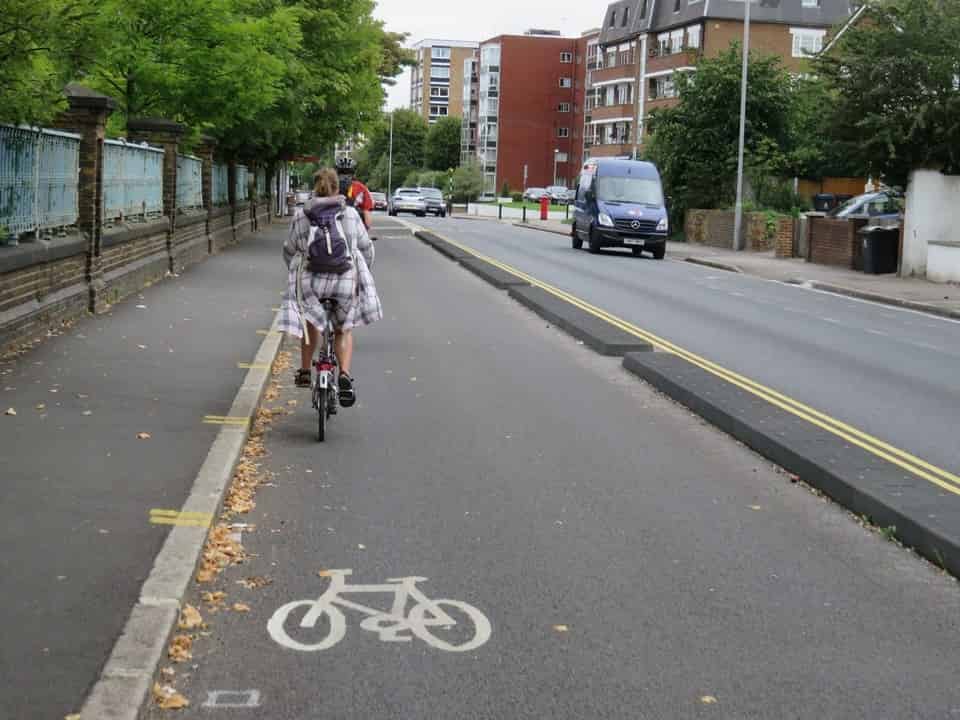
Delivery of about 22 km of segregated lanes plus multiple LTNs across three neighbourhoods was funded at £30m, but the study covers a single borough.
Sustainability / continuity2/3
The interventions have stayed in place since 2014 and a 2021 economic study reports £724m benefits against £80m costs, though that estimate is modelled.
Innovation2/3
Applied Dutch-style design (Copenhagen crossings, segregated lanes, area-wide filtering) in an outer-London suburban context.
Inclusiveness / equity1/3
Attitudes to cycling improved across demographic groups, but 2018 reporting flagged consultation flaws and resident opposition.
Multi-stakeholder collaboration1/3
Borough and Transport for London delivered it with academic evaluation, but the consultation process was criticised.
Evidoria. Mini-Holland de Waltham Forest — bairros de tráfego reduzido e ciclovias segregadas no exterior de Londres. ID persistente: ecec0a8b-b1a7-4c0e-867b-6cab7bc1892d.