Top 63%
en este catálogo (1043 prácticas puntuadas)
Las puntuaciones se concentran en valores altos, por lo que la posición dentro del catálogo suele ser más reveladora que el número por sí solo.
Evidence of impact / measured results2/3
A peer-reviewed longitudinal natural experiment (2016–19) shows 22% lower car use, but with only 49–66 LTN residents per analysis and wide confidence intervals.
Transferability / demonstrated replication3/3
LTNs and Mini-Holland measures have been adopted by other London boroughs and the programme was funded in three boroughs, with a documented design toolkit.
Scalability2/3
Delivery of about 22 km of segregated lanes plus multiple LTNs across three neighbourhoods was funded at £30m, but the study covers a single borough.
Sustainability / continuity2/3
The interventions have stayed in place since 2014 and a 2021 economic study reports £724m benefits against £80m costs, though that estimate is modelled.
Innovation2/3
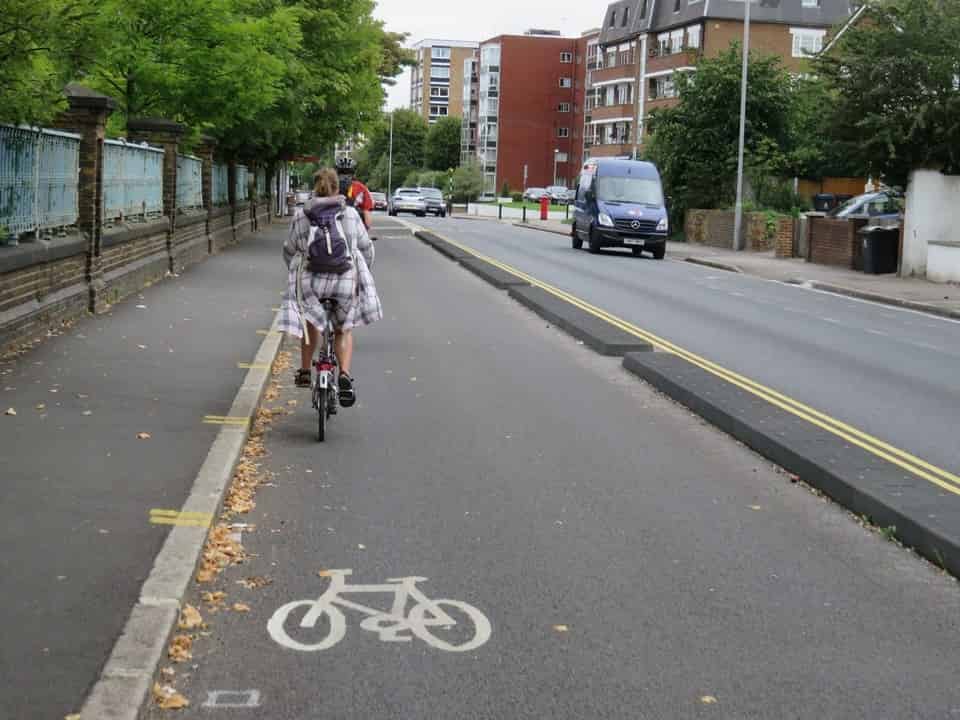
Applied Dutch-style design (Copenhagen crossings, segregated lanes, area-wide filtering) in an outer-London suburban context.
Inclusiveness / equity1/3
Attitudes to cycling improved across demographic groups, but 2018 reporting flagged consultation flaws and resident opposition.
Multi-stakeholder collaboration1/3
Borough and Transport for London delivered it with academic evaluation, but the consultation process was criticised.
Evidoria. Mini-Holland de Waltham Forest — barrios de bajo tráfico y carriles bici segregados en el exterior de Londres. ID persistente: ecec0a8b-b1a7-4c0e-867b-6cab7bc1892d.