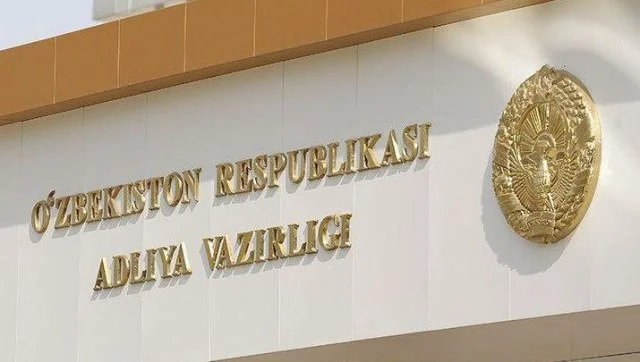
Uzbekistan's Ministry of Justice built LexAI, the country's first state-run legal AI assistant, analysing 34,000+ regulatory documents to power a chatbot, drafting …
Tashkent, Uzbekistan
Good practice
Evidence: Descriptive / self-reported
Top 81%33/100
Peru's 2025 AI-law regulation names education a 'high-risk' sector, mandating algorithmic transparency, human oversight and data-protection-by-design for school evaluation systems by September …
Lima, Peru
Good practice
Evidence: Observational / pre–post
Top 81%33/100
Colombia's Resolution 1517/2012 created a mandatory, ratio-based (up to 9:1) biodiversity offset system for mining and infrastructure licensing. Case studies quantify offset …
In Austria women are still underrepresented in leadership positions compared to their share of the population. Thus, equal representation of women and …
Austria· National
Good practice
Evidence: Descriptive / self-reported
Top 87%30/100
Denmark banned Helsingør's use of Google Chromebooks/Workspace in schools in 2022 over undocumented data transfers. A five-year probe ended in January 2026 …
Helsingør, Denmark
Good practice
Evidence: Descriptive / self-reported
Top 89%27/100
Chile's 2024 'Ley Pompón' bans peat extraction and regulates Sphagnum moss harvesting across an estimated 3.2-4 million hectares of peatland; an independent …
Since 2014 New Zealand's national biodiversity-offsetting guidance has let developers offset unavoidable habitat loss through resource consents aiming for 'no net loss' …
Since 2007, Russia's 'maternity capital' grant (now ~737,000 rubles) raised long-run fertility by ~0.15 children per woman, but peer-reviewed and feminist research …
Moscow, Russia
Good practice
Evidence: Observational / pre–post
Top 89%26/100
In 2016 Bahamian MPs unanimously passed four bills for equal citizenship and anti-discrimination rights for women, but voters rejected all four (61-79% …
Nassau, Bahamas
Good practice
Evidence: Observational / pre–post
Top 89%26/100
This study was commissioned by the European Parliament’s Policy Department for Citizens' Rights and Constitutional Affairs at the request of the Committee …