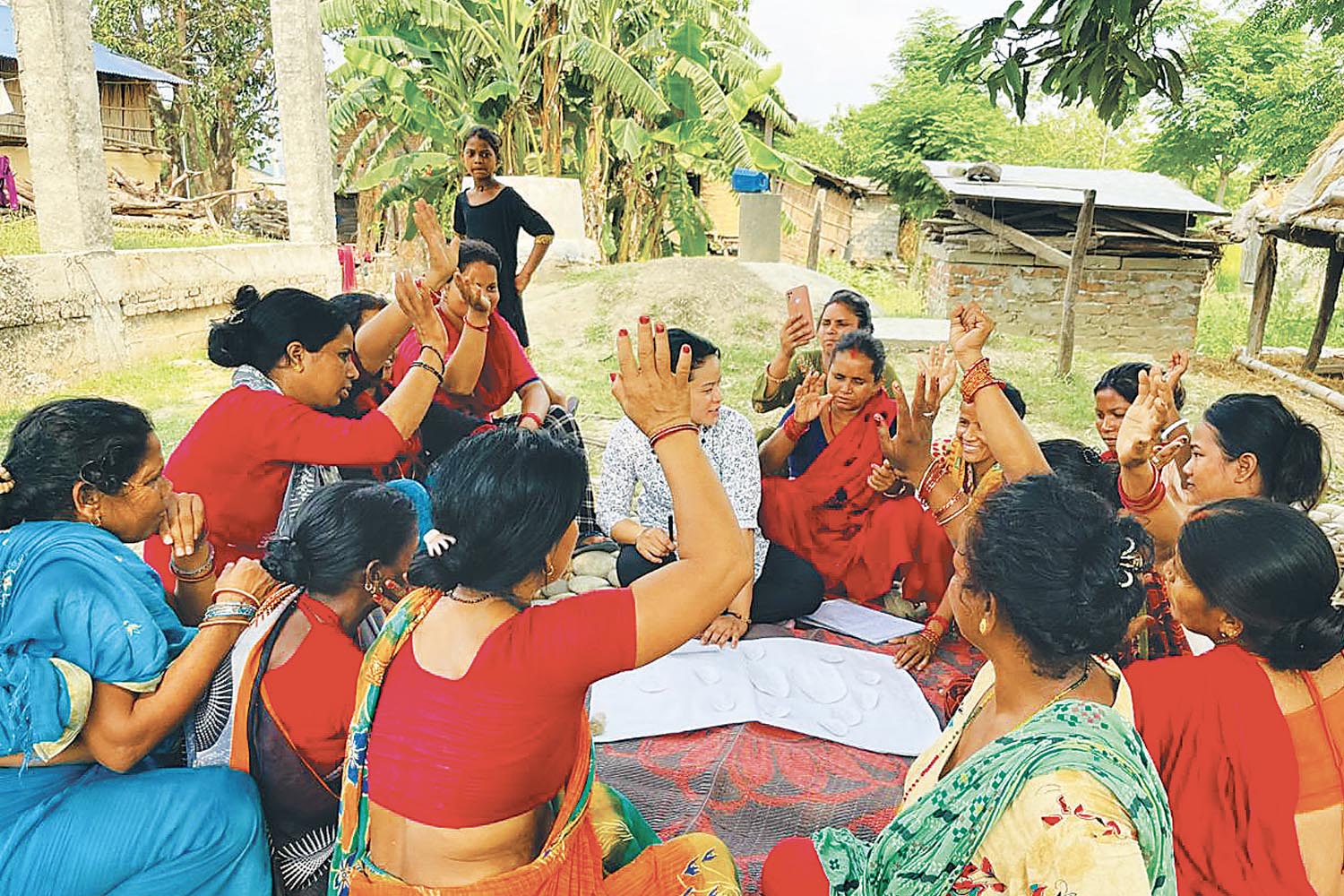
In Nepal's Kailali and Doti districts, Restless Development and UN Women ran a 2015–2017 peer-education programme against chhaupadi menstrual exile huts, cutting …
Dhangadhi, Nepal
Good practice
Evidence: Descriptive / self-reported
Top 10%96/100
OLE Nepal deploys offline digital libraries (E-Pustakalaya) and interactive learning software (E-Paath) on local servers in remote Nepali schools without internet access, …
A cluster-randomised trial in Nepal's Terai region combined a 9-month couples' curriculum with an 8-month community diffusion campaign, finding sustained reductions in …
Bharatpur, Nepal
Good practice
Evidence: Observational / pre–post
Top 27%76/100
In December 2024 UNICEF and ATscale launched 'Dina,' Nepal's first Nepali-language text-to-speech voice, pretested with about 15 young volunteers with visual impairments …
Kathmandu, Nepal
Good practice
Evidence: Descriptive / self-reported
Top 42%74/100
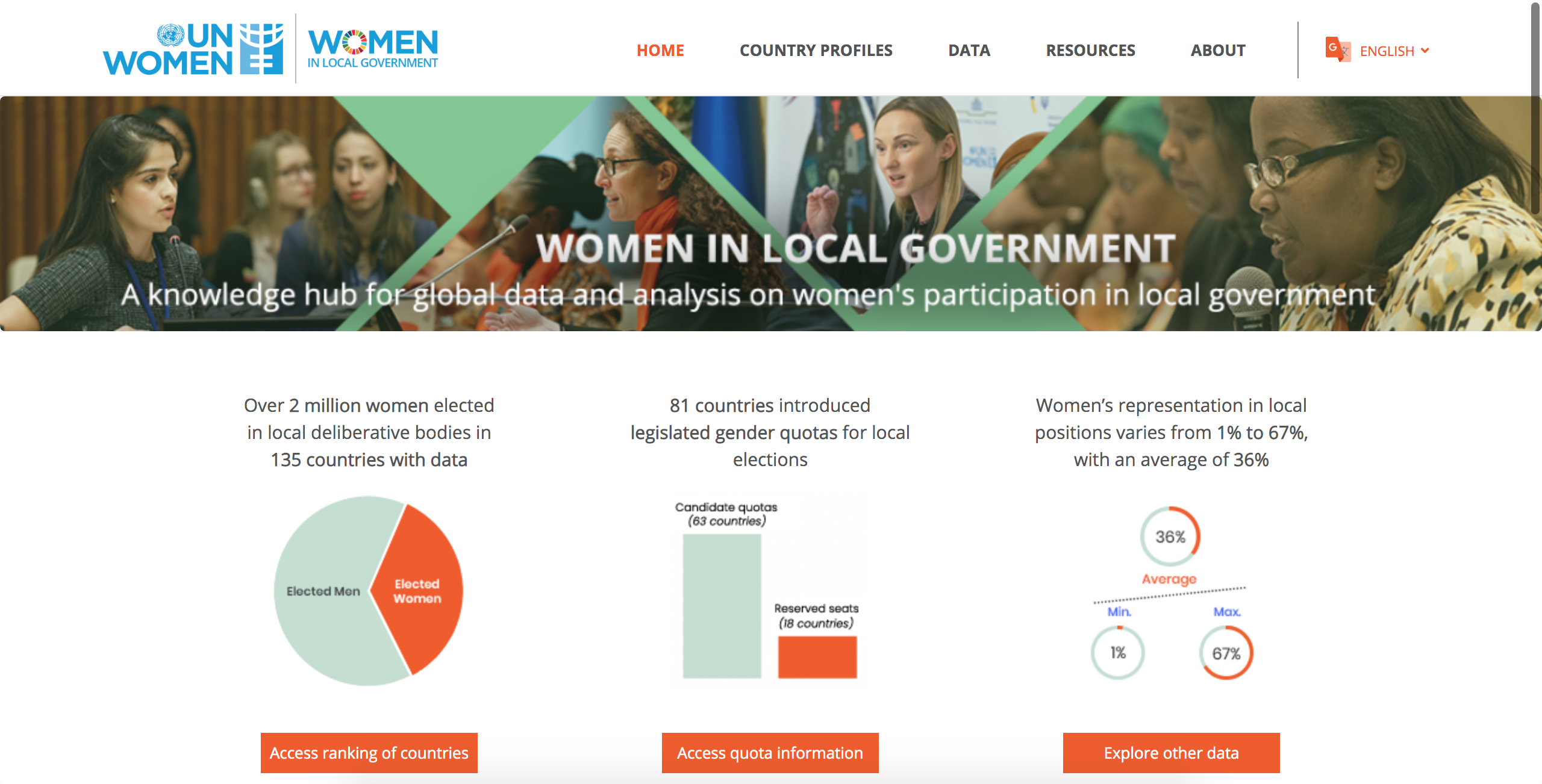
Nepal's 2015 Constitution mandated 40% women in all state organs; the 2017 local elections resulted in 14,352 women elected—40.96% of 35,041 representatives—making …
Kathmandu, Nepal
Good practice
Evidence: Descriptive / self-reported
Top 22%73/100
Nepal Customs built an in-house machine-learning module inside ASYCUDA World, now running in the six largest customs offices, screening ~90% of commercial …
Since 2011, Nepal's health ministry has built hospital-based One-Stop Crisis Management Centres for gender-based-violence survivors, reaching 88 centres in 77 districts by …
Nepal received its first-ever REDD+ results-based payment - US$9.4 million from the World Bank's FCPF - in November 2025, after independently verifying …
Bharatpur, Nepal
Good practice
Evidence: Descriptive / self-reported
Top 62%53/100
ITU and Nepal's Telecommunications Authority ran a 2025 multi-city programme for girls 12–24 — a Kathmandu Valley launch, coding challenges in Butwal …
Lalitpur, Nepal
Good practice
Evidence: Quasi-experimental
Top 27%53/100
OLE Nepal's 'intelligent OCR' (iOCR) converts scanned Nepali/English documents into screen-reader-compatible e-books, filling a gap in Nepali-script OCR. Built with KDDI Foundation …
Lalitpur, Nepal
Good practice
Evidence: Descriptive / self-reported
Top 83%52/100
Nepal's $80m World Bank-financed REED project pairs rural agri-SMEs with mentors for business diagnostics and coaching; two Pokhara firms tracked by the …
Pokhara, Nepal
Good practice
Evidence: Observational / pre–post
Top 67%52/100
A pilot bringing coding, web development, design and generative-AI literacy — plus dedicated AI-safety workshops — to 500 marginalised girls across 40 …
Nepal's jurisdictional REDD+ programme covering 1.7M ha of the Terai Arc Landscape: 2.4M tCO2e reduced 2018–2024, US$9.4M World Bank FCPF payment (2025). …
Kathmandu, Nepal
Good practice
Evidence: Observational / pre–post
Top 58%40/100
A radio drama and weekly community listening groups run by Equal Access International in Chitwan, Nawalparasi and Kapilvastu, Nepal. A cluster-randomised trial …