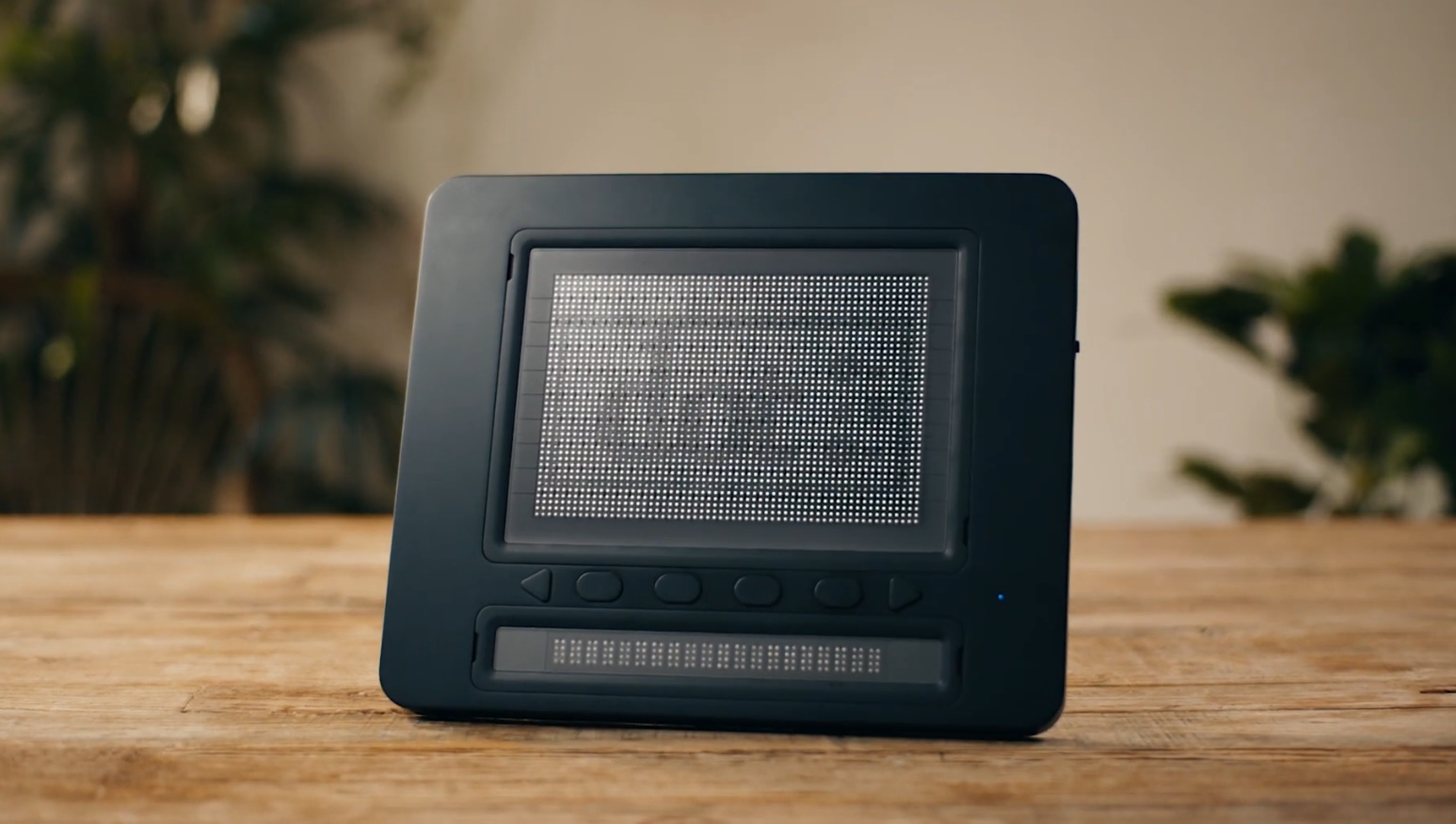
Bengaluru-based Thinkerbell Labs built Annie, an audio-guided, self-correcting braille teaching device that lets blind and low-vision students learn independently. Deployed in over …
Bengaluru, India
Good practice
Evidence: Observational / pre–post
Top 24%92/100
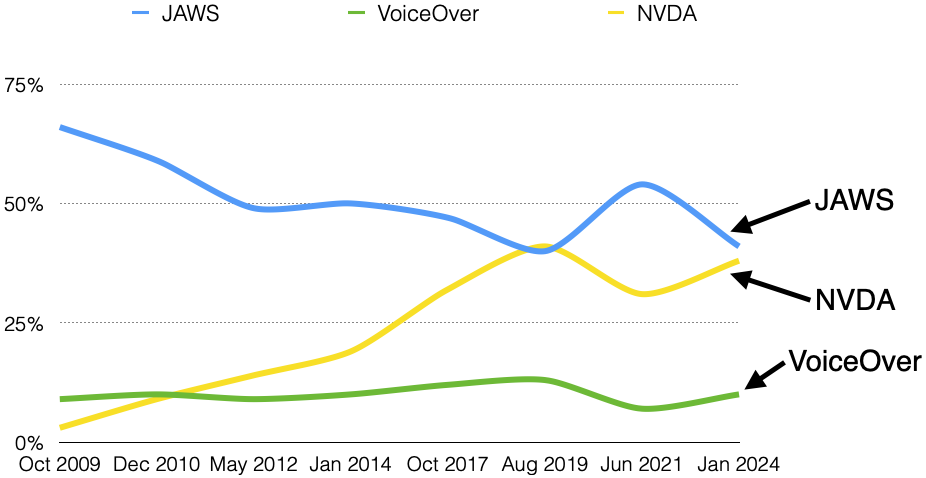
Free, open-source Windows screen reader from Australian non-profit NV Access. WebAIM's independent 2024 survey of 1,539 users found NVDA the most commonly …
Brisbane, Australia
Good practice
Evidence: Descriptive / self-reported
Top 24%92/100
eKitabu, a Nairobi edtech nonprofit, builds born-accessible e-books for blind/low-vision learners and Kenyan Sign Language video storybooks for deaf learners with Kenya's …
Nairobi, Kenya
Good practice
Evidence: Observational / pre–post
Top 39%76/100
Chang Gung University ran Taiwan's first feasibility and efficacy studies of eye-gaze assistive technology for children with severe motor and communication difficulties, …
Taoyuan, Taiwan
Good practice
Evidence: Randomised controlled trial
Top 6%73/100
STMicroelectronics Foundation, ITU and a blind Milan professor run train-the-trainer digital-literacy classes for blind and visually-impaired adults in Dakar. An advanced module …
Jamaica's 2022 pilot developed accessible digital storybooks tested in five schools—four for deaf, blind and intellectually disabled students. UNICEF's 10-country ADT programme; …
Eswatini's telecom-regulator-run Universal Access Service Fund has distributed thousands of subsidised smartphones and specialised assistive devices, reaching over 14,000 elderly people and …
Mbabane, Eswatini
Good practice
Evidence: Descriptive / self-reported
Top 55%72/100
A free government app gives Bahamians with disabilities one-touch access to emergency alerts, sign-language interpretation, job listings and transport bookings. Usage doubled …
Nassau, Bahamas
Good practice
Evidence: Descriptive / self-reported
Top 55%72/100
A permanent FCC program (since 2017) giving low-income deafblind Americans free specialised communications equipment plus in-home training, delivered through 56 certified state …
SLIIT researchers built Pubudu, a deep-learning mobile app screening Sri Lankan children aged 6-7 for dyslexia, dysgraphia and dyscalculia in local languages. …
Malabe, Sri Lanka
Good practice
Evidence: Descriptive / self-reported
Top 14%67/100
A Trinity College Dublin spin-out's AI tablet game screened over 25,000 pre-literate children across six countries in 2023-24 for dyslexia and phonemic-awareness …
Dublin, Ireland
Good practice
Evidence: Descriptive / self-reported
Top 14%67/100
A €4m Friuli Venezia Giulia project deploys AI speech-to-text captioning for deaf/hard-of-hearing students. A 2025 peer-reviewed SWOT/TOWS analysis of stakeholders found real …
Trieste, Italy
Good practice
Evidence: Descriptive / self-reported
Top 14%67/100
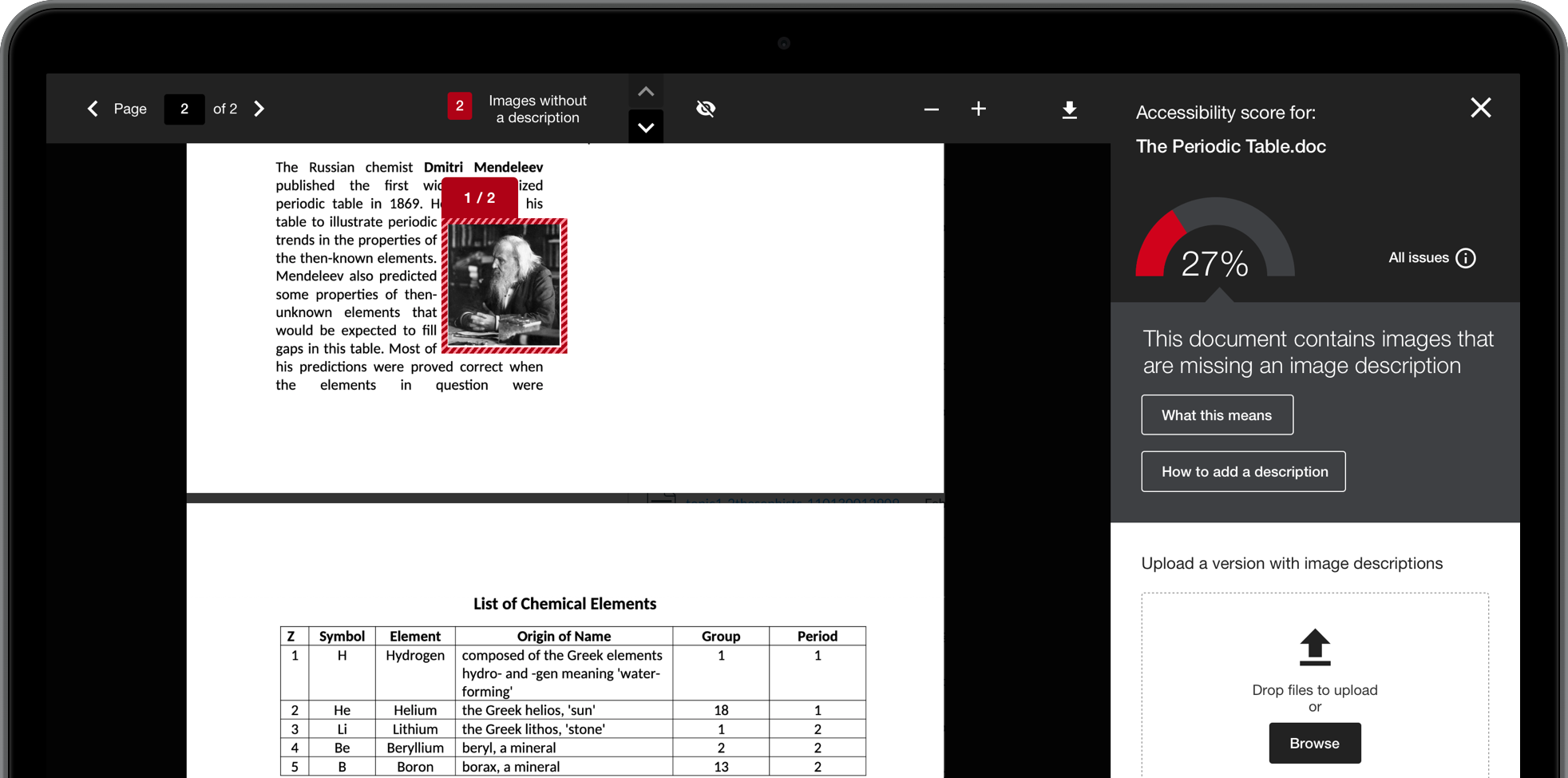
AI service embedded in learning management systems that auto-generates accessible alternative formats (audio, ePub, HTML, Braille-ready) for all course materials; 2,000+ institutions …
Boca Raton, United States of America
Good practice
Evidence: Descriptive / self-reported
Top 63%60/100
Seoul-based Dot Incorporation built the first commercialised electromagnetic tactile display, letting blind and low-vision users feel braille text and graphics refreshed in …
Seoul, South Korea
Good practice
Evidence: Descriptive / self-reported
Top 24%60/100
Livox, an AI-adaptive augmentative-communication app built by a father for his daughter with cerebral palsy, was formally adopted into Recife's public schools …
INSENSION is an online platform that allows individuals with profound and multiple learning disabilities (PIMD) to use digital applications and services. The …
The DE-ENIGMA project is developing artificial intelligence for a commercial robot (Robokind’s Zeno). The robot will be used for an emotion-recognition and …
Enschede, Netherlands· Transnational
Good practice
Evidence: Descriptive / self-reported
Top 68%56/100